Fifty frames, decoded. My favourite frames from the best-lit films ever shot, broken into where the light comes from, the three hexes that carry it, the stock it resembles, and the exact line to paste into your own prompt.
The deal
Fifty frames from the best-lit films ever shot. I didn't make any of them. I studied all of them. Every frame is credited, and every decode is the homework: where the light comes from, what the palette is doing, how the grade behaves. You're not taking the frame. You're taking the lesson.
How to raid it
01/Find your light situationThe vault is grouped by light, not by film: sun, grey north, window, one bulb, sodium, neon, void. Go straight to the situation your brief needs.
02/Read the decode, not the vibeEvery frame is broken into the calls that made it: light direction and quality, three hexes measured from the actual pixels, and the stock the grade resembles.
03/Steal the lineEvery frame ends with one STEAL line written to go straight into a prompt. Take it word for word, swap in your subject, keep the hexes.
04/Run the thief on anything elseFound a frame you love that is not in here? The Frame Thief prompt at the bottom decodes any frame the same way, automatically.
The subject goes between you and the light. Backlight, flare and silhouette: the cheapest drama in photography, and AI renders it beautifully because the sun does the acting.
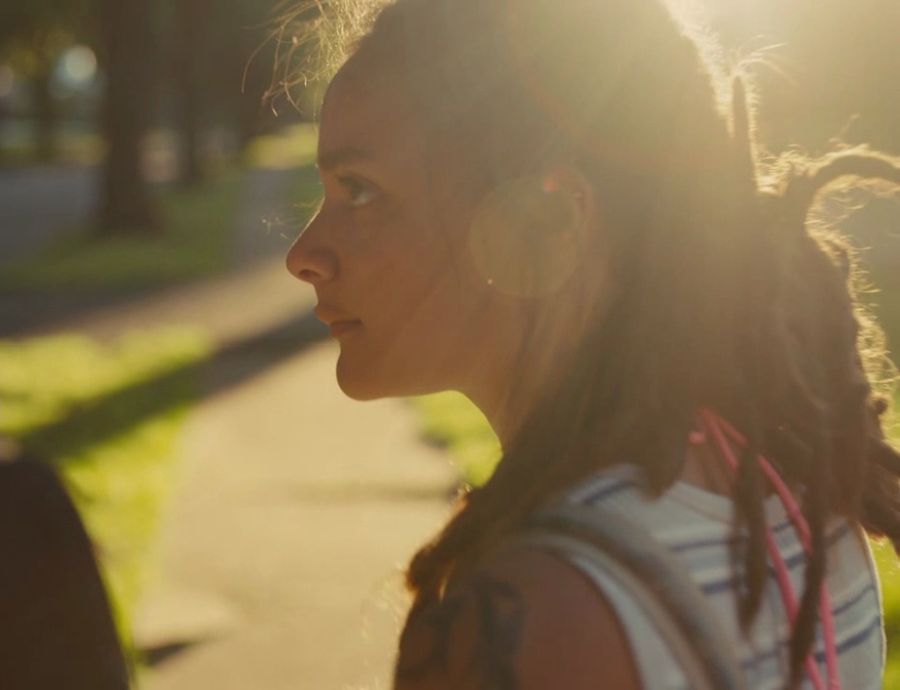
01American Honey (2016) · dir. Andrea Arnold · DP Robbie Ryan
Light
Low golden sun directly behind her head, hard backlight rimming the hair and blooming into a full lens flare. The fill is warm bounce off the pavement, about two stops under the rim.
Palette
#CEB680#70583D#4D3E2A
Grade
Kodak Portra warmth on 35mm, halation in the flare, highlights glow instead of clipping.
Steal
Put the sun directly behind the subject's head, let the flare bloom across the lens, and expose for the cheek so everything else runs golden.
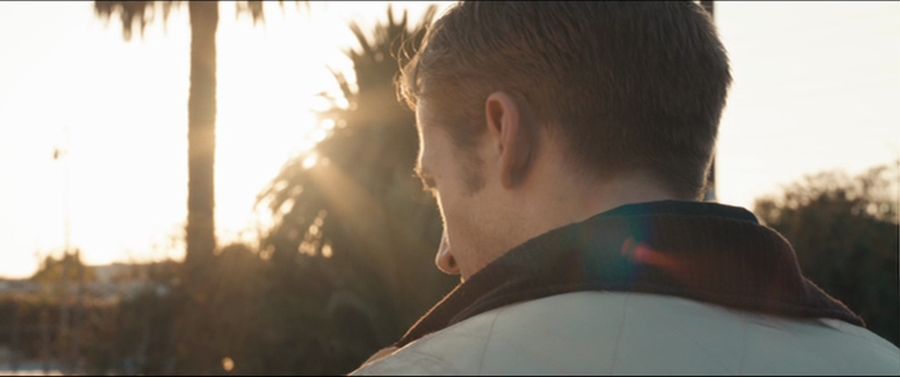
02Drive (2011) · dir. Nicolas Winding Refn · DP Newton Thomas Sigel
Light
Dusk sun shot straight into, filtered through palm trees. His head falls to a soft dark mass with a thin warm rim; the haze in the air carries most of the light.
Palette
#F9F9F6#B49B7C#3C342B
Grade
Golden near-monochrome dusk, gentle highlight rolloff, one anamorphic flare streak allowed.
Steal
Shoot into a hazy dusk sun and let the subject go almost black; ask for a thin warm rim on the hair and haze that carries the glow.
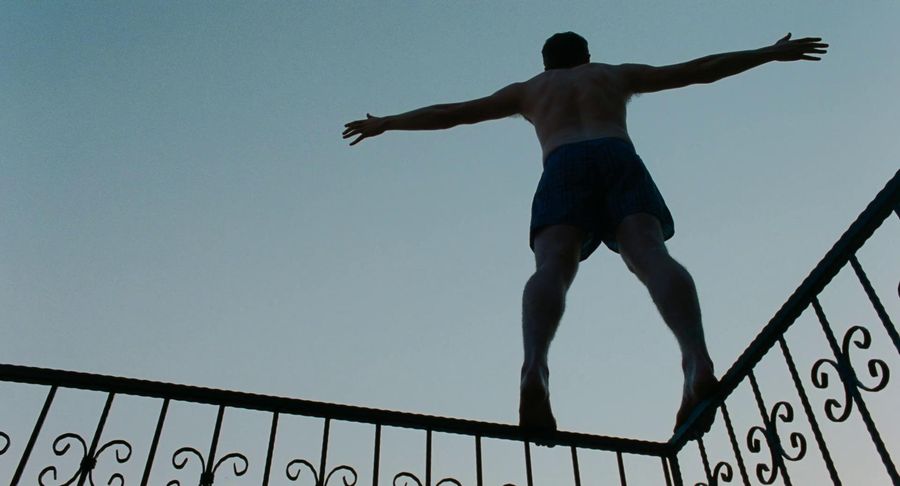
03Aftersun (2022) · dir. Charlotte Wells · DP Gregory Oke
Light
Pre-dusk open sky as one giant soft source behind him, nothing else. The body and the iron rail fall to full silhouette; the sky holds a quiet blue-grey gradient.
Palette
#9BABB0#6C8991#0E1213
Grade
Cool 35mm quiet, soft grain, no crush: the silhouette stays gentle, not graphic.
Steal
Ask for a figure in full silhouette against a flat pale evening sky, balanced on one strong diagonal, and keep the blacks soft.
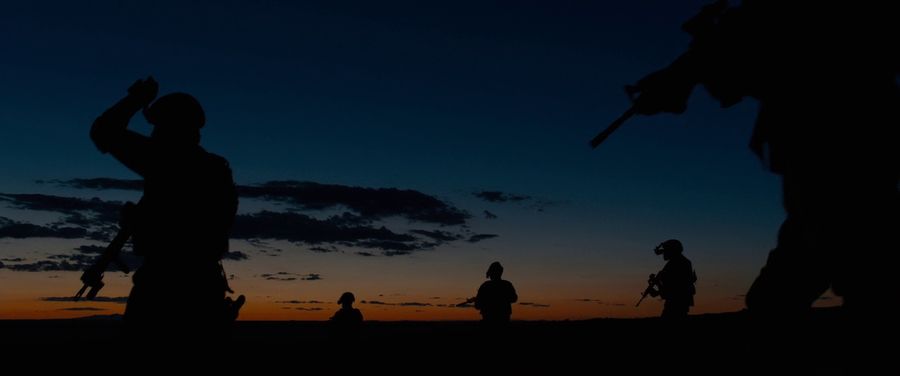
04Sicario (2015) · dir. Denis Villeneuve · DP Roger Deakins
Light
Ten minutes after sunset, the sky gradient is the only light left: ember orange at the horizon rising into deep blue. Every figure is a pure black cutout against it.
Palette
#021325#47250F#020203
Grade
Clean digital blacks graded fearless: silhouettes crushed on purpose while the sky keeps its gradient.
Steal
Stage your subjects in profile against a post-sunset gradient sky and crush them to black; the readable outline is the whole image.
Soft bright daylight doing nothing clever, and one loud painted colour doing everything. The wall is the lighting rig.
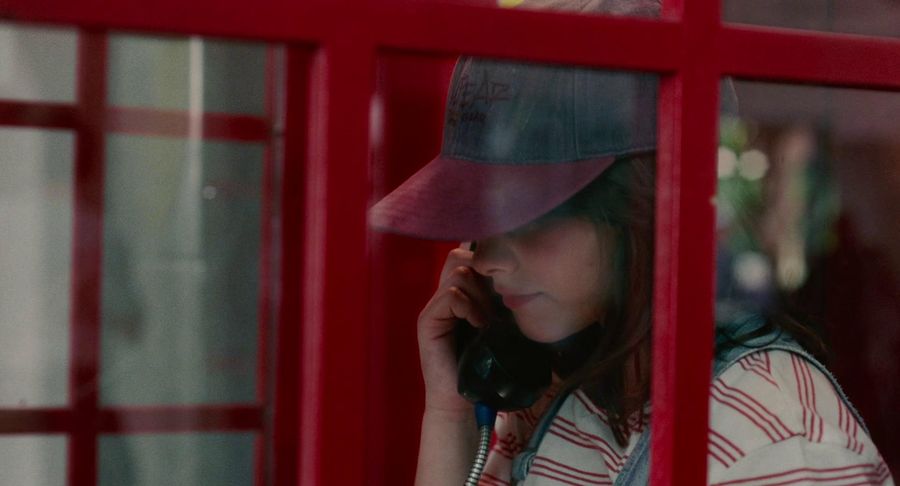
05Aftersun (2022) · dir. Charlotte Wells · DP Gregory Oke
Light
Open shade: no direct sun on her at all, just sky bounce coming in soft from the left. All the contrast in the frame is paint, the red phone box against her washed stripes.
Light with open shade only and put one saturated painted object in frame to do the contrast; wash the wardrobe so the object wins.
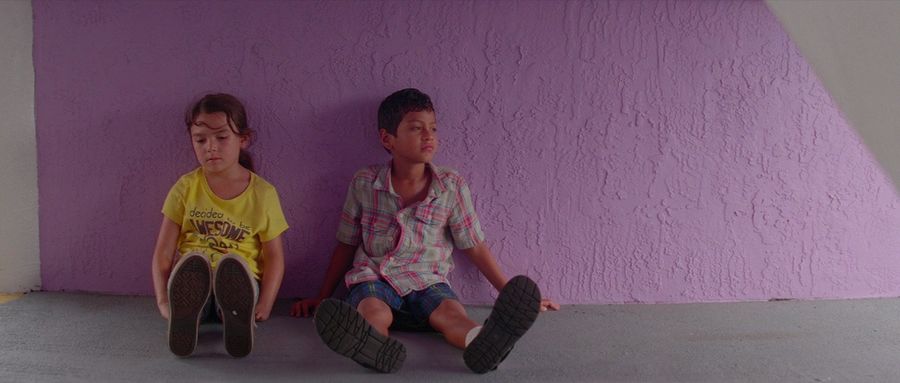
06The Florida Project (2017) · dir. Sean Baker · DP Alexis Zabé
Light
Covered walkway shade with a huge soft bounce rolling in from the sunlit car park. Even light on the kids, one hard ceiling shadow cutting the top corner of the violet wall.
Palette
#987F97#5E3E51#746B69
Grade
Saturated pastel print look, clean and sweet, texture kept in the stucco.
Steal
Sit the subject against a pastel stucco wall in walkway shade and let bounced sun do the lighting; keep one architectural shadow in frame.
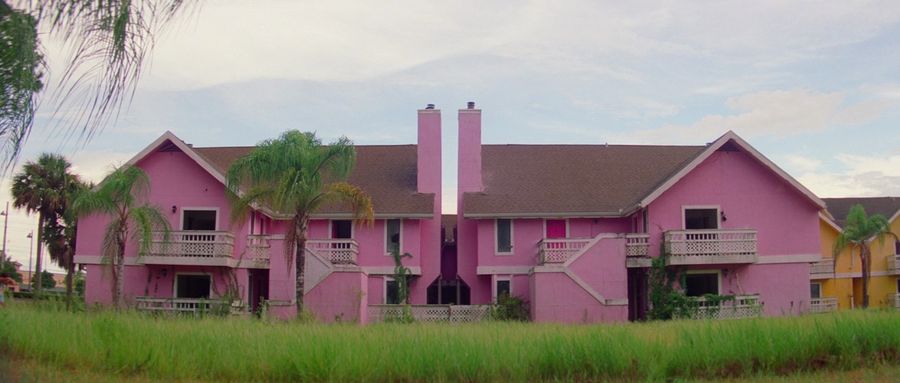
07The Florida Project (2017) · dir. Sean Baker · DP Alexis Zabé
Light
Bright overcast, the whole sky as one softbox. Zero shadows to hide in, so the pink building and the overgrown green field carry the entire frame.
Palette
#C9CDD3#7F5E62#4C4F2C
Grade
Postcard saturation on a flat grey day, the pink pushed just past polite.
Steal
On a flat overcast day, point at one loud-coloured building dead-centre and let colour do the work light refuses to do.
Overcast British light, the big free softbox. Nothing glamorous arrives from the sky, so the frame is styling, posture and muted colour. This is the estate world.
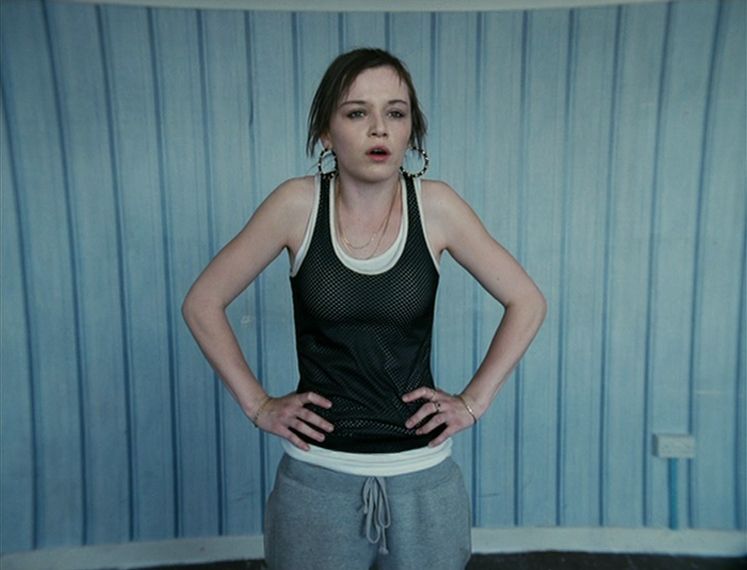
08Fish Tank (2009) · dir. Andrea Arnold · DP Robbie Ryan
Light
Flat overcast top light, slightly ahead of her, soft shadow under the brow and chin and nothing else. The pale blue corrugated wall reads almost the same tone as the sky.
Palette
#829798#51707D#121B1A
Grade
Cool 35mm with gentle grain, greys kept grey, skin left honest.
Steal
Stand the subject square to camera against a corrugated wall under flat overcast light, hands on hips, deadpan, no glamour anywhere.
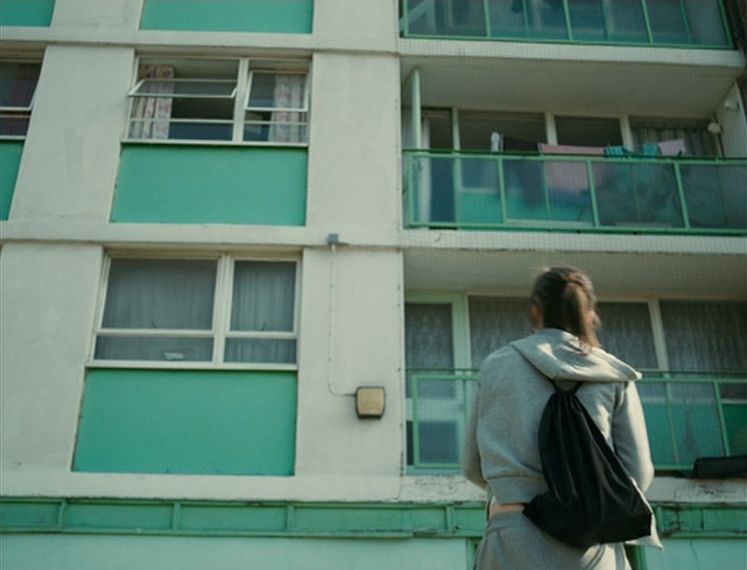
09Fish Tank (2009) · dir. Andrea Arnold · DP Robbie Ryan
Light
White overcast sky bouncing off every window of the mint tower block. Shot looking up from her shoulder, so the building becomes the sky.
Palette
#9EAEA1#598D7E#324B40
Grade
Muted green-grey palette, no lift in the blacks, documentary flat.
Steal
Frame the subject from behind looking up at a coloured housing block under white sky; let the architecture be the landscape.
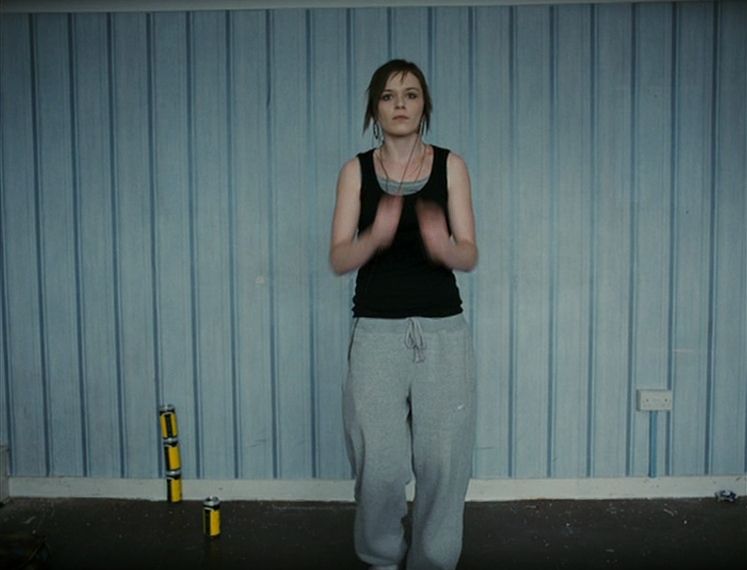
10Fish Tank (2009) · dir. Andrea Arnold · DP Robbie Ryan
Light
The same overcast softbox, dead even across the blue-striped wall. Her hands blur mid-move because the light is too low to freeze them, and that blur is the life of the frame.
Palette
#788B8B#4E6369#171A16
Grade
Grey-blue and unforced, shutter drag left visible.
Steal
Ask for even overcast light on a striped wall and allow motion blur on the hands; keep everything else still and centred.
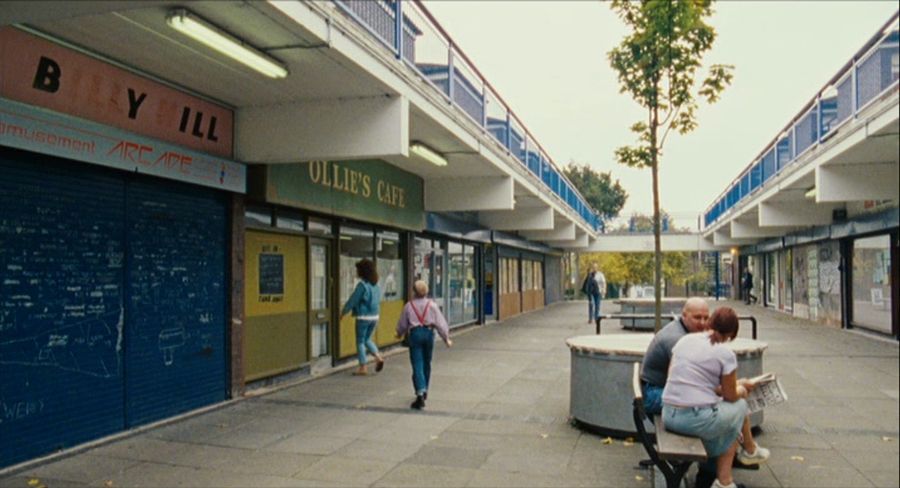
11This Is England (2006) · dir. Shane Meadows · DP Danny Cohen
Light
Overcast daylight down the open precinct, strip fluorescents burning under the walkway canopy. Two light systems, both flat, meeting at the shop line.
Palette
#9F9A8B#4B493A#0B1F2C
Grade
Desaturated 16mm-feeling grade, teal shutters and mustard doors doing the colour.
Steal
Shoot a shuttered precinct under overcast light with the walkway fluorescents on; let the empty shopfronts give you the palette.
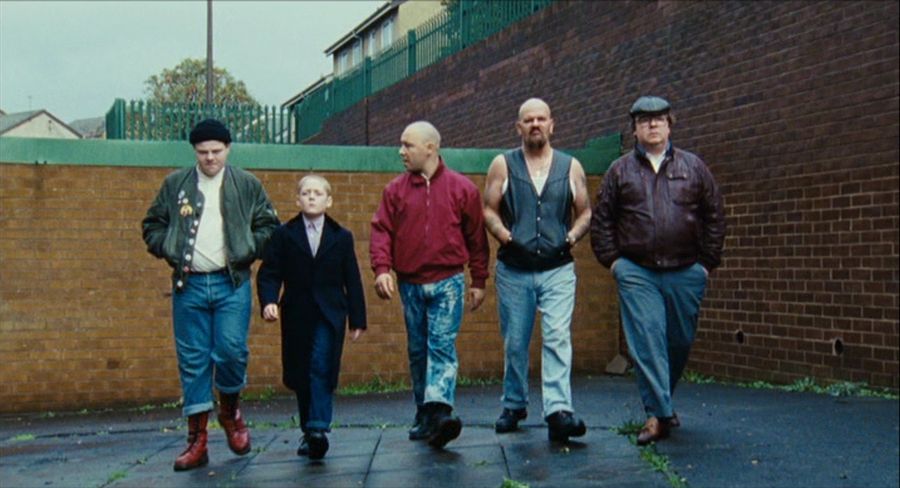
12This Is England (2006) · dir. Shane Meadows · DP Danny Cohen
Light
Full overcast, no direction to the light at all. Five figures in a loose line walking at camera; brick wall and green fence hold the frame while the wardrobe holds the story.
Palette
#B0C8C0#73543A#2D2826
Grade
Muted browns and denim blues, skin slightly cold, nothing prettified.
Steal
March the squad at camera in flat grey light, styled hard, expressionless; the group walk is the composition.
13This Is England (2006) · dir. Shane Meadows · DP Danny Cohen
Light
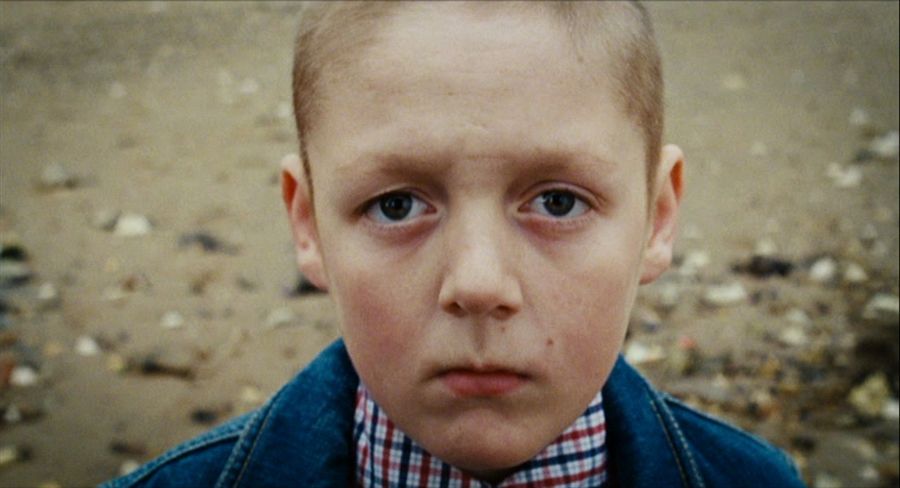
Soft frontal overcast on the boy's face, the shingle beach blurring to porridge behind him. Light so even you read every freckle; the deadpan stare is the contrast.
Palette
#B0A38C#988B72#544637
Grade
Warm-grey seaside film look, gentle grain, no bloom.
Steal
Close portrait in flat beach light, collar buttoned, eyes straight down the lens, no expression; let the face be the event.
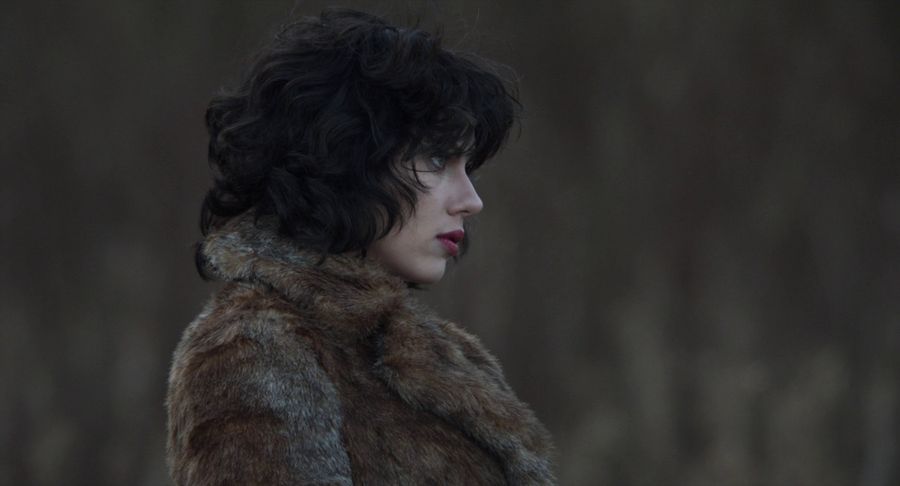
14Under the Skin (2013) · dir. Jonathan Glazer · DP Daniel Landin
Light
Glasgow grey from everywhere and nowhere: shadowless, cold, damp. The fur collar soaks up the light, porcelain skin holds it, and the red lip is the only saturated thing alive.
Palette
#494645#33312F#0E0F13
Grade
Cold neutral grade a breath from monochrome, one red accent left in.
Steal
Ask for shadowless grey daylight, a dark fur frame around pale skin, and exactly one saturated accent; kill every other colour.
One window, soft key, centuries of proof it works. This is the light every portrait client thinks they want when they say natural.
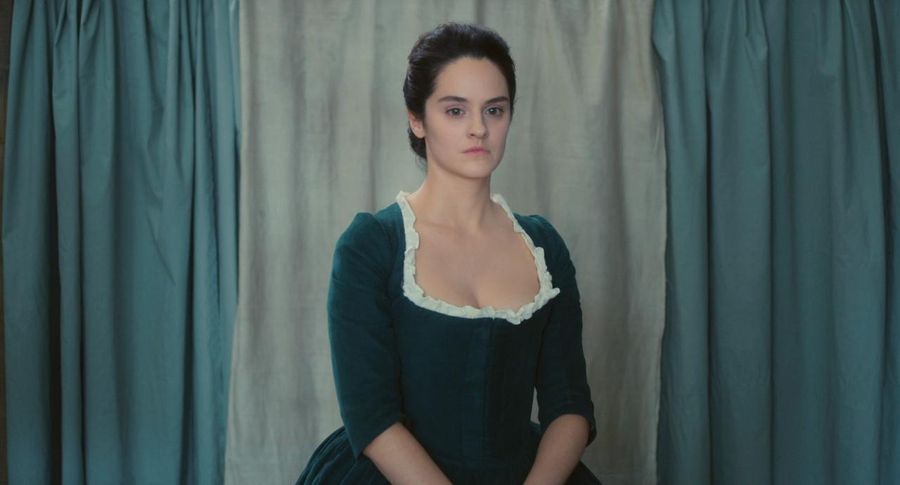
15Portrait of a Lady on Fire (2019) · dir. Céline Sciamma · DP Claire Mathon
Light
One tall window off frame left, soft and slightly ahead of her, modelling the face in long quiet gradients. Blue drapes bounce cool fill into the shadow side.
Palette
#3D595D#8D8D83#172223
Grade
Oil-painting softness, cool north-light neutrality, zero sparkle.
Steal
Key with a single tall window just left of camera, cool fill from the room itself, and pose the subject like she has been sitting for a painter for an hour.
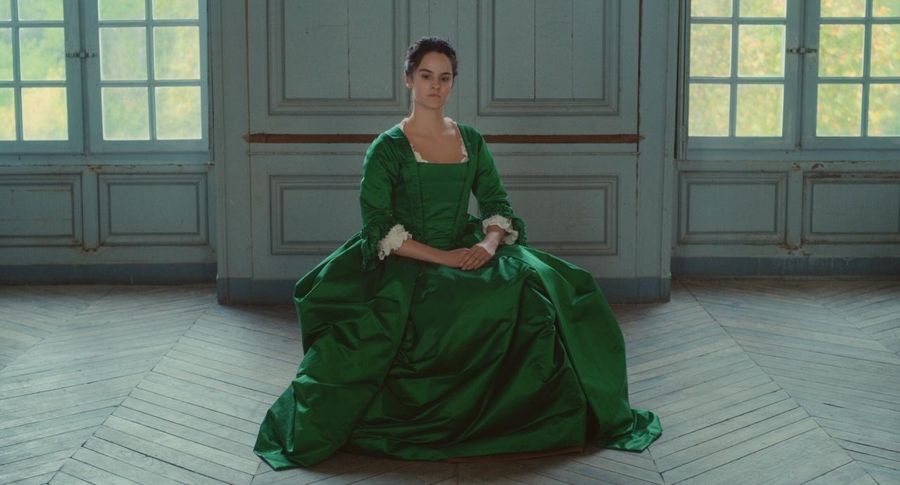
16Portrait of a Lady on Fire (2019) · dir. Céline Sciamma · DP Claire Mathon
Light
Two windows behind and beside her throwing soft ambient bounce around the panelled room; nothing hits her directly. The emerald satin lifts out of the muted grey-green walls.
Palette
#9AAC9B#192C18#4E5A57
Grade
Muted museum palette around one jewel colour, daylight balanced.
Steal
Place the subject centre-frame in a grand muted room lit only by its own windows, and give her the one saturated garment in the scene.
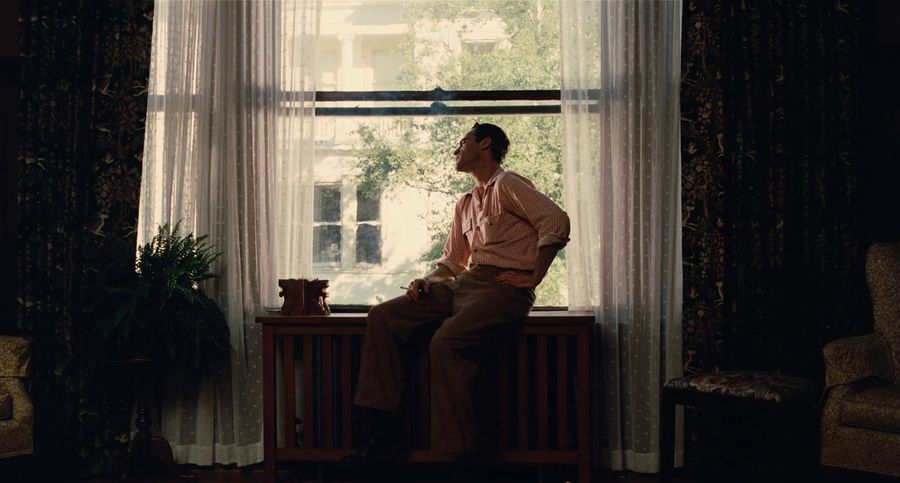
17The Master (2012) · dir. Paul Thomas Anderson · DP Mihai Malaimare Jr.
Light
A bay window with sheer curtains as the only source, blasting soft daylight around his seated profile. The room wraps him in near-black; the window is both key and background.
Sit the subject at a sheer-curtained window and expose for the curtains, letting the room drop to black; the silhouette carries the mood.
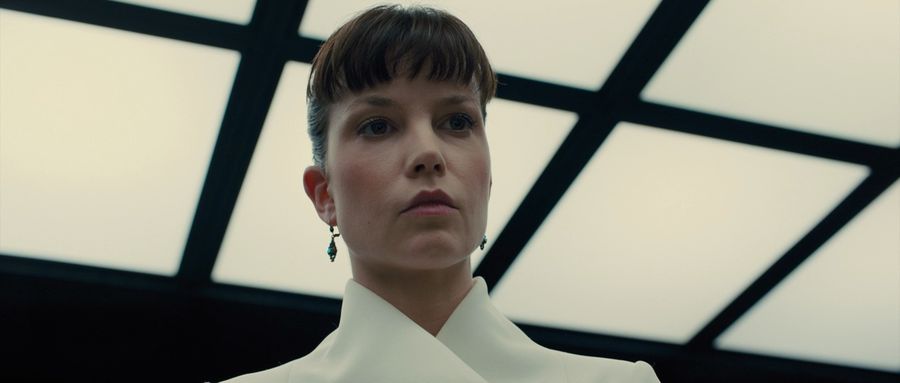
18Blade Runner 2049 (2017) · dir. Denis Villeneuve · DP Roger Deakins
Light
A glowing skylight grid straight overhead, top light like an interrogation of the face: bright forehead and cheekbones, eyes falling into shadow under the brow.
Palette
#D9D5BE#9FA596#060C10
Grade
Bone-white and black, surgical contrast, no warmth anywhere.
Steal
Light from a luminous ceiling grid directly above, white wardrobe against black, and let the eyes go dark; cruelty by geometry.
A single practical in the dark. The frame is whatever the bulb says it is: the most controllable look in AI prompting because you only have to describe one source.
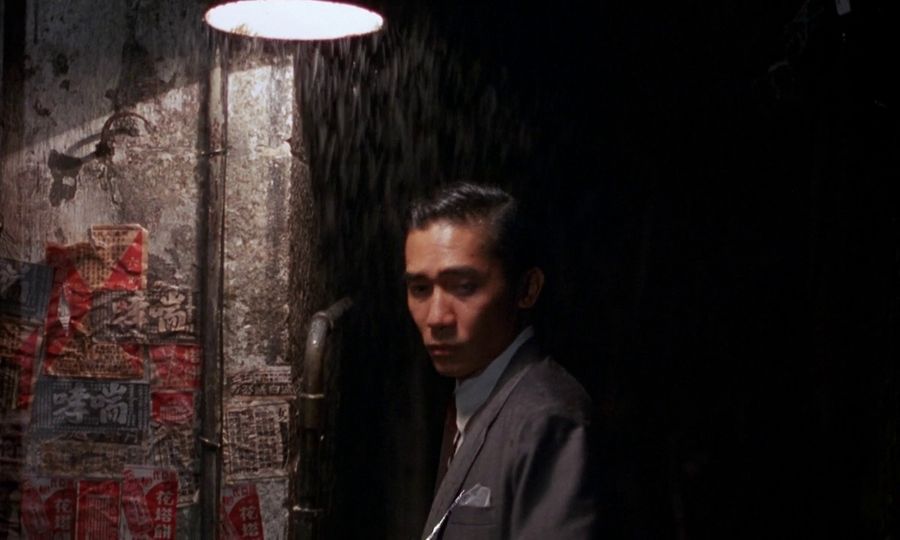
19In the Mood for Love (2000) · dir. Wong Kar-wai · DP Christopher Doyle, Mark Lee Ping-bing
Light
One bare cone downlight above the alley wall, hard top spill raking the wet mould-stained plaster and old posters. He stands just off the beam, half-swallowed by black.
Palette
#A4928D#57403C#060505
Grade
Tungsten push-processed feel: heavy warm grain, blacks like velvet.
Steal
Hang one hard downlight over a decayed wall, put the subject at the beam's edge, and let ninety percent of the frame die to black.
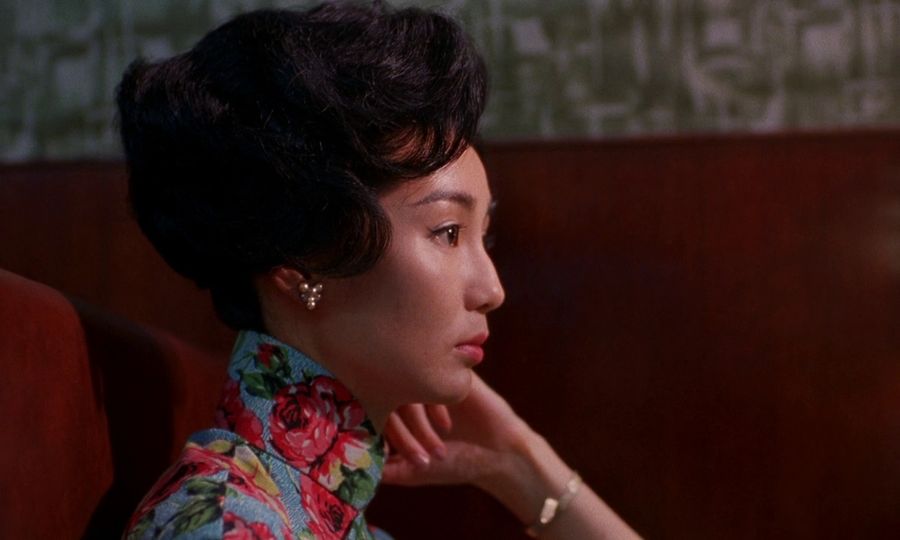
20In the Mood for Love (2000) · dir. Wong Kar-wai · DP Christopher Doyle, Mark Lee Ping-bing
Light
Warm tungsten from front right, low and close, lighting the profile and the silk flowers on the cheongsam. The red booth behind her glows a stop darker like a curtain of embers.
Palette
#966362#2A0A06#52403D
Grade
Deep red-amber tungsten, saturated but crushed, romance graded like a secret.
Steal
Key the profile with one warm close lamp and back her with saturated red a stop under the face; keep the palette to embers only.
21In the Mood for Love (2000) · dir. Wong Kar-wai · DP Christopher Doyle, Mark Lee Ping-bing
Light
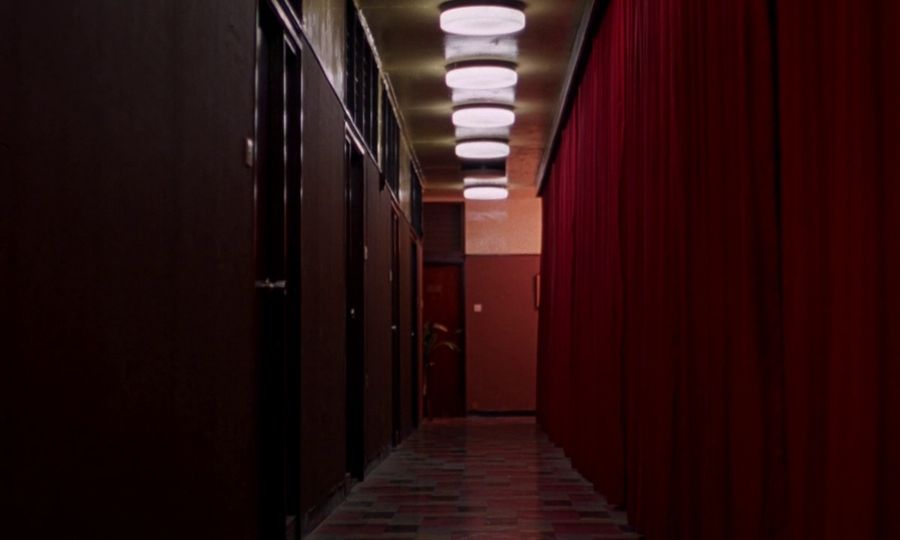
A corridor of glowing ceiling discs receding into dark red walls, glossy floor bouncing every lamp back up. Light repeats instead of spreading: pools, gaps, pools.
Palette
#C3AAAF#67453E#280001
Grade
Claret and lampglow, gloss kept on every surface.
Steal
Build a red corridor lit only by a repeating line of ceiling lamps over a reflective floor; one-point perspective, nobody in it.
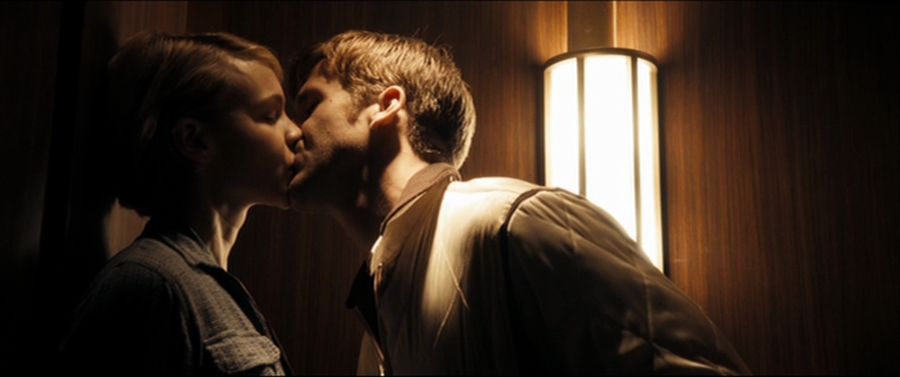
22Drive (2011) · dir. Nicolas Winding Refn · DP Newton Thomas Sigel
Light
One art-deco wall sconce burning gold behind them in the elevator, key and background at once. Faces take the spill from the side; everything not gold is walnut black.
Palette
#F1E9DA#96683F#050302
Grade
Molten tungsten against black, high contrast with soft skin.
Steal
Light the whole scene with one warm sconce behind the subjects and expose for its glow; let the kiss happen in the spill.
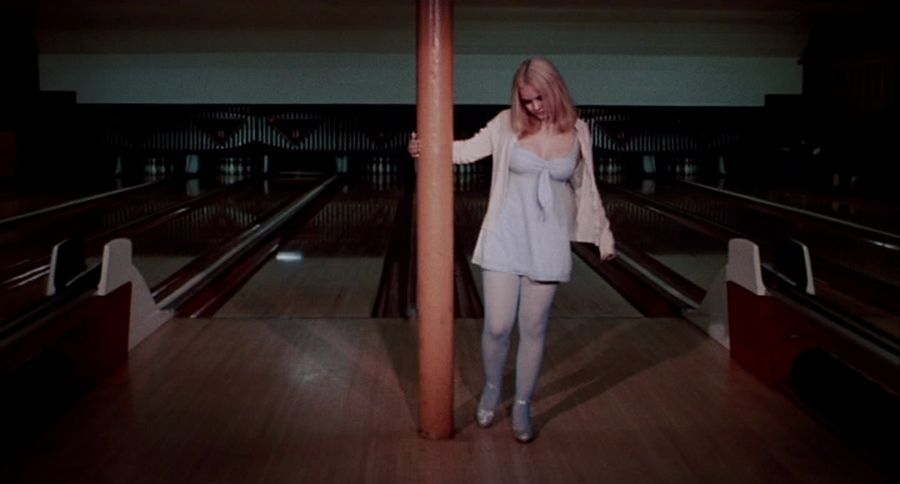
23Buffalo '66 (1998) · dir. Vincent Gallo · DP Lance Acord
Light
Bowling alley downlights pooling on the lane and on her, hard from above, black swallowing the pin decks behind. Her white dress and tights become the brightest object in the building.
Pool hard top light on a pale-dressed figure in a dark interior and let every edge fall away; one person, one pool, done.
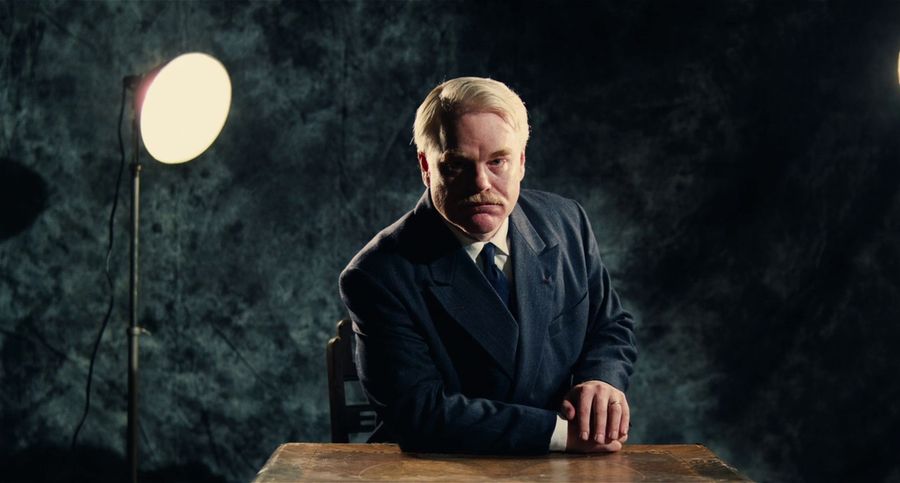
24The Master (2012) · dir. Paul Thomas Anderson · DP Mihai Malaimare Jr.
Light
A portrait studio built in one frame: hot lamp on a stand at left, mottled grey backdrop behind, subject lit hard from his front-left with the working light left visible.
Palette
#DECAB0#222F32#050A0E
Grade
Vintage portrait-studio warmth on the face, steel-blue backdrop kept cold.
Steal
Show the rig: one hot lamp in frame, a painted backdrop, the subject squared to camera like a 1950 portrait sitting.
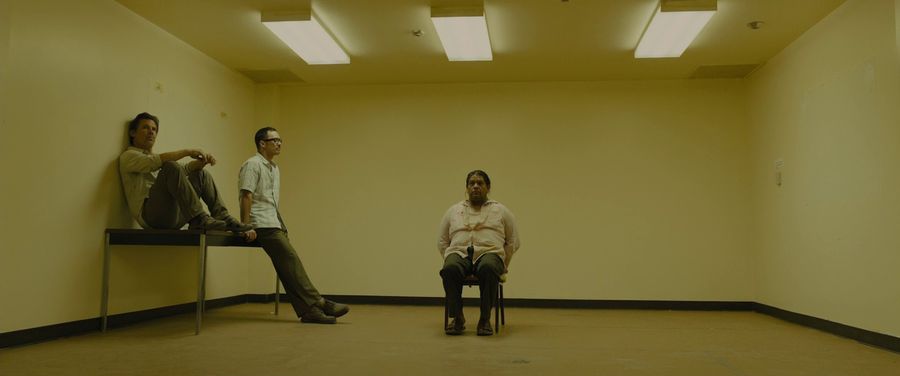
25Sicario (2015) · dir. Denis Villeneuve · DP Roger Deakins
Light
Bare fluorescent panels overhead in a yellow-green room, even institutional light with no modelling at all. Three men and their small shadows; the emptiness is lit like evidence.
Palette
#857C45#645515#29240E
Grade
Nicotine yellow-green, flat and airless, graded to feel like a smell.
Steal
Light a bare room with overhead fluorescents only, push the walls yellow-green, and place your subjects sparse; dread comes free.
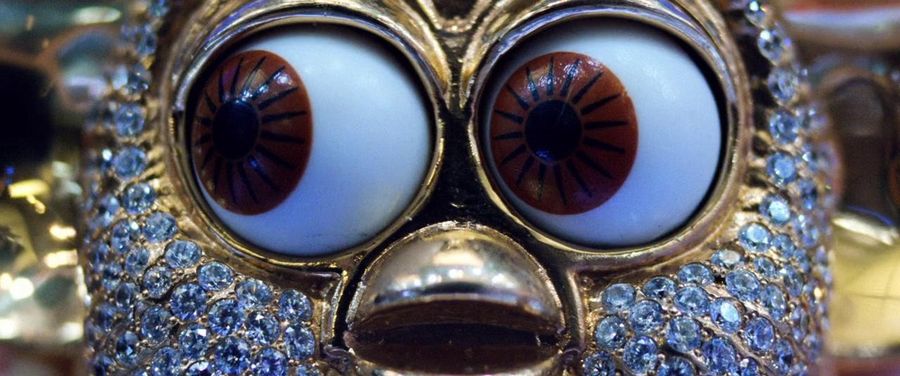
26Uncut Gems (2019) · dir. Josh and Benny Safdie · DP Darius Khondji
Light
Jewellery-counter light: dozens of tiny hard speculars hitting pave diamonds and polished gold from every direction, so the object sparkles without one visible source.
Palette
#ACBCC8#777B87#33282A
Grade
Icy diamond whites against warm gold, macro depth of field a millimetre deep.
Steal
Go macro on one absurd object under showcase lighting, ask for hundreds of point speculars, and let the object be the whole story.
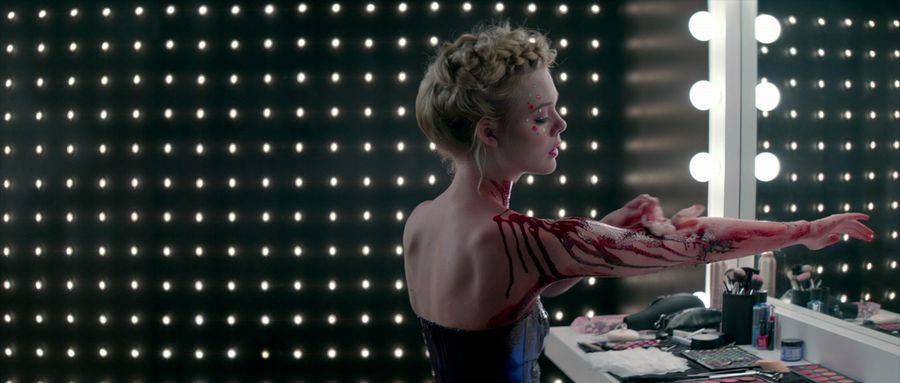
27The Neon Demon (2016) · dir. Nicolas Winding Refn · DP Natasha Braier
Light
A wall of bare bulbs as the backdrop and the makeup-mirror bulbs as the key, so she sits between two grids of tungsten points. The light is glamour hardware made visible.
Palette
#AEB0AD#66605F#040F0D
Grade
Chrome-cold glamour, bulb points held as discs, skin like porcelain.
Steal
Back the subject with a grid of practical bulbs and key from mirror lights; let the hardware of beauty be the set.
One street lamp against black. Night exteriors live or die on a single warm source and how honestly it falls off.
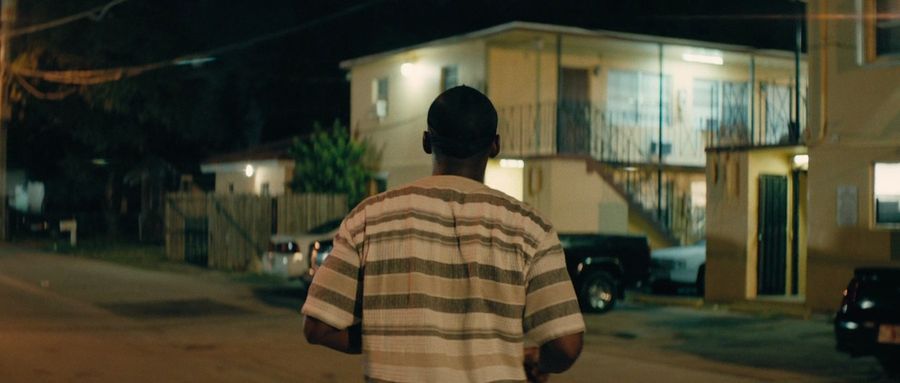
28Moonlight (2016) · dir. Barry Jenkins · DP James Laxton
Light
Porch fluorescents and a sodium street lamp lighting the apartment block from two angles, warm pools on the walkway, teal doors holding the cool side. He walks into the light back-to-camera.
Palette
#BEC5AF#827450#081010
Grade
Warm-on-teal night balance, blacks kept breathing, skin lit by the street itself.
Steal
Light the night with the building's own lamps, subject from behind walking into the pool, warm sodium against teal paint.
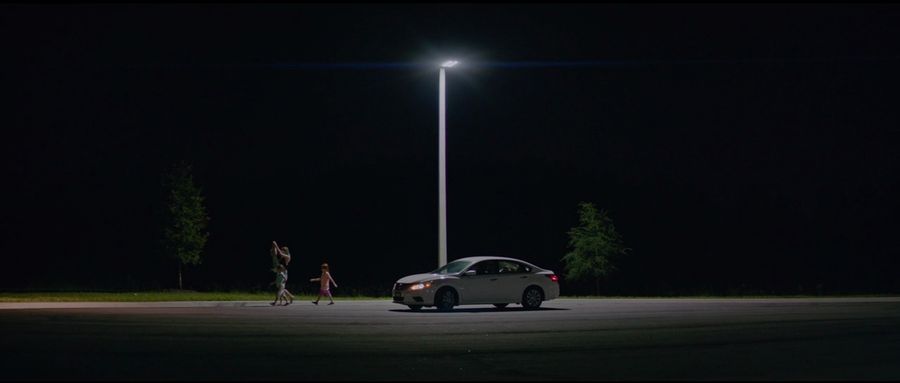
29The Florida Project (2017) · dir. Sean Baker · DP Alexis Zabé
Light
One tall parking-lot lamp dropping a cold white-green pool on empty asphalt, black night eating everything past its radius. Tiny figures, huge dark.
Palette
#4F4B4C#282A24#05070B
Grade
Mercury-vapour green-white, no fill, negative space graded to nothing.
Steal
One lone lamp pole, one pool of light, subjects small at its edge, and eighty percent of the frame pure night.
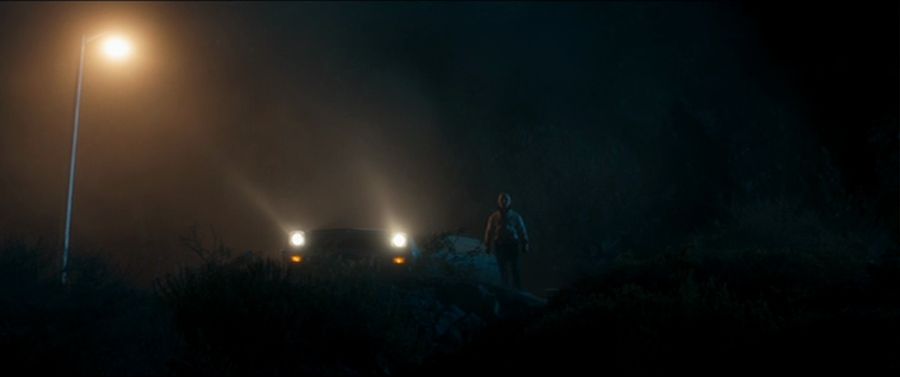
30Drive (2011) · dir. Nicolas Winding Refn · DP Newton Thomas Sigel
Light
Fog night with two colour systems: a sodium lamp head burning orange high left, and white car headlights punching through the haze low right. The fog turns both into volumes.
Palette
#BE9C77#584331#051113
Grade
Orange and white beams in grey-blue murk, halation everywhere it should be.
Steal
Fill the night with fog and cross two sources through it, one sodium and one white; light becomes geometry you can stand in.
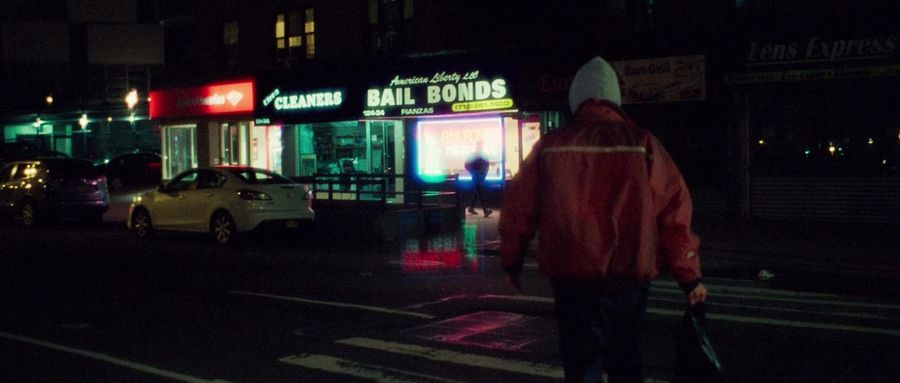
31Good Time (2017) · dir. Josh and Benny Safdie · DP Sean Price Williams
Light
Shop-sign light only: bail bonds neon and storefront fluorescents throwing red, green and cyan slabs across the wet street while he walks through them in a red jacket.
Palette
#C2C1AC#445145#050209
Grade
Grubby telephoto night, neon smeared by the long lens, grain heavy and right.
Steal
Walk the subject past lit shopfronts at night, no movie lights, long lens; let each sign recolour them as they pass.
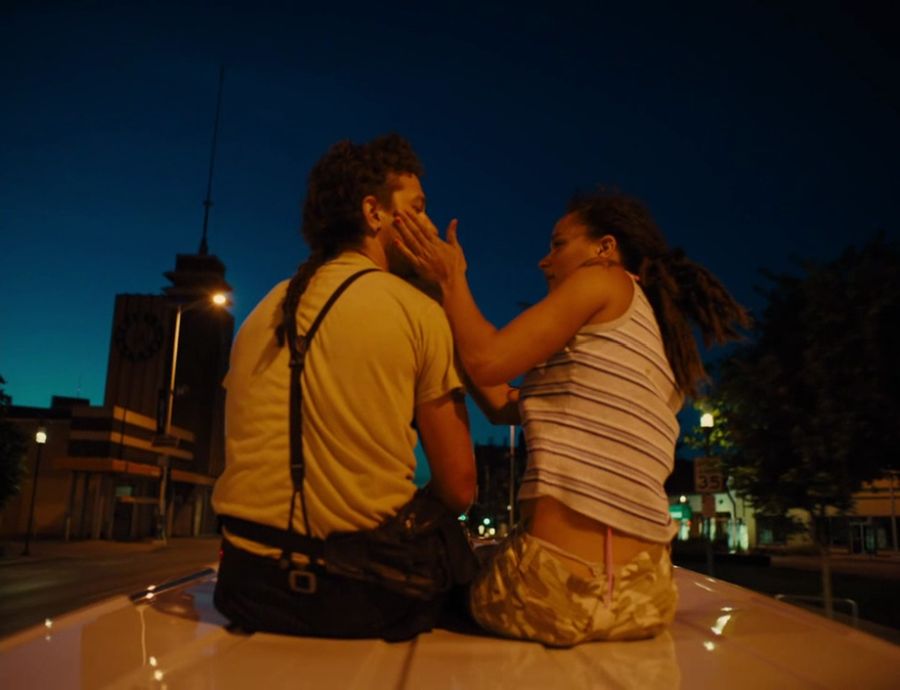
32American Honey (2016) · dir. Andrea Arnold · DP Robbie Ryan
Light
Deep blue dusk sky over the street, one sodium street lamp keying the couple from the left, warm on skin against the cold sky. Mixed light with no correction, as found.
Palette
#935316#011123#130B07
Grade
Portra pushed into night: amber skin, ink sky, gentle grain.
Steal
Shoot at dusk while the sky still reads blue and key with a street lamp's amber; hold both temperatures and correct nothing.
Signs, tubes and coloured gas. The light is the set dressing and the set dressing is the light. This is where campaign night frames live.
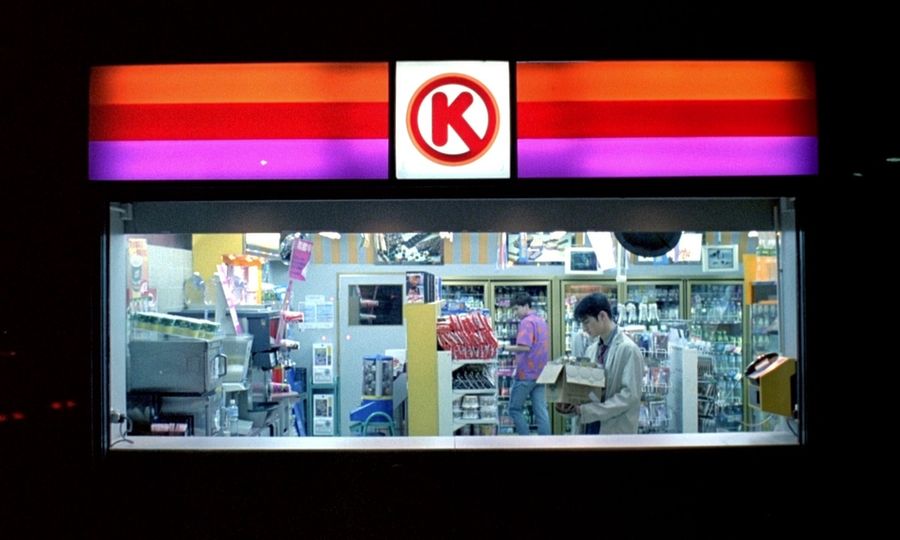
33Chungking Express (1994) · dir. Wong Kar-wai · DP Christopher Doyle, Andrew Lau
Light
The shop as a lantern: orange, magenta and red lightbox bands glowing over a white fluorescent interior, shot square-on from the dark street like a vending machine diorama.
Palette
#DA2E1A#DB45E8#ACBDBF
Grade
Expired-stock saturation, signs a stop hot, interior clinical white.
Steal
Frame a lit storefront dead square from the dark and expose for the signage; the building becomes the product shot.
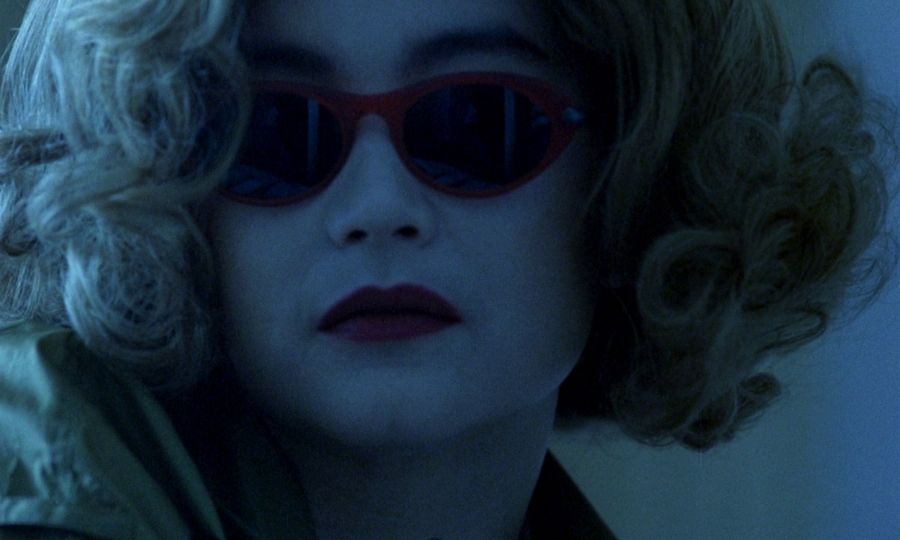
34Chungking Express (1994) · dir. Wong Kar-wai · DP Christopher Doyle, Andrew Lau
Light
Cold blue gloom on the whole face, source somewhere low ahead of her, with the red sunglasses and red lips holding the only warmth. Noir by colour instead of shadow.
Palette
#3E6E8F#27455D#03050C
Grade
Steel blue with red accents, contrast smoky rather than hard.
Steal
Bathe the portrait in cold blue and give the styling two red objects to fight back with; blonde wig optional but correct.
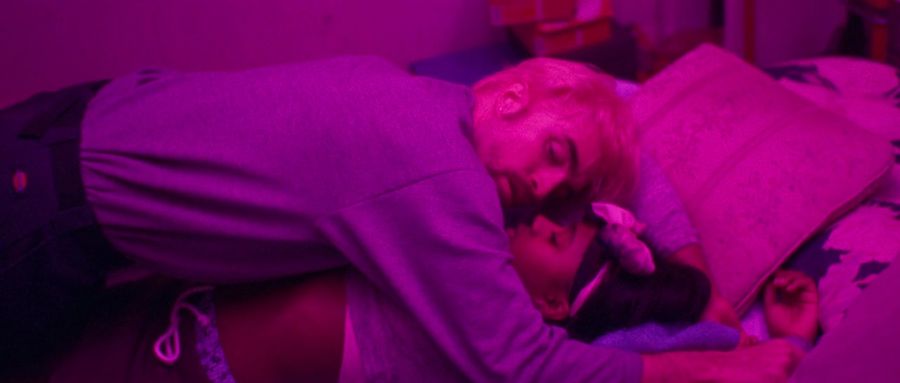
35Good Time (2017) · dir. Josh and Benny Safdie · DP Sean Price Williams
Light
One magenta source washing the entire room, skin, sheets and shadows all inside one hue. Depth comes only from brightness falloff, not from colour separation.
Palette
#AF0183#820073#17011B
Grade
Monochrome magenta, grain like static, zero correction toward normal.
Steal
Choose one violent hue and light the whole scene inside it; let brightness, not colour, separate the bodies from the room.
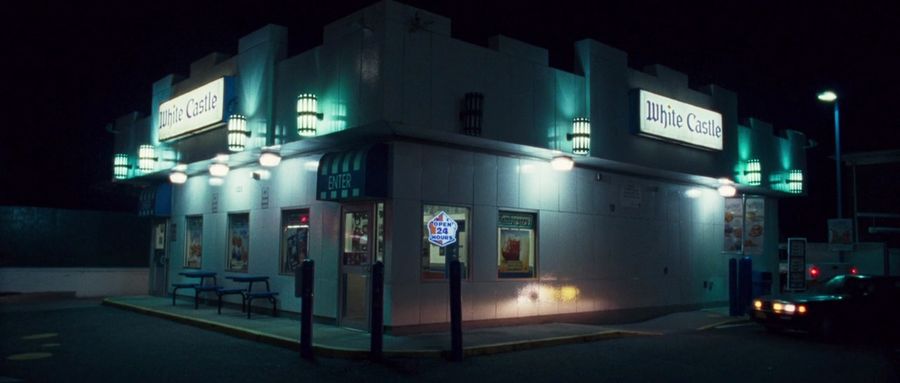
36Good Time (2017) · dir. Josh and Benny Safdie · DP Sean Price Williams
Light
The White Castle as the only bright object in the night: teal-white walls, green lamps and menu glow spilling onto the tarmac, black sky pressing down on it.
Palette
#ABC5BC#456163#05010B
Grade
Fast-food fluorescence against void black, colours slightly toxic.
Steal
Shoot the glowing building as the hero at night, wide enough that darkness surrounds it; civilisation as a lit box.
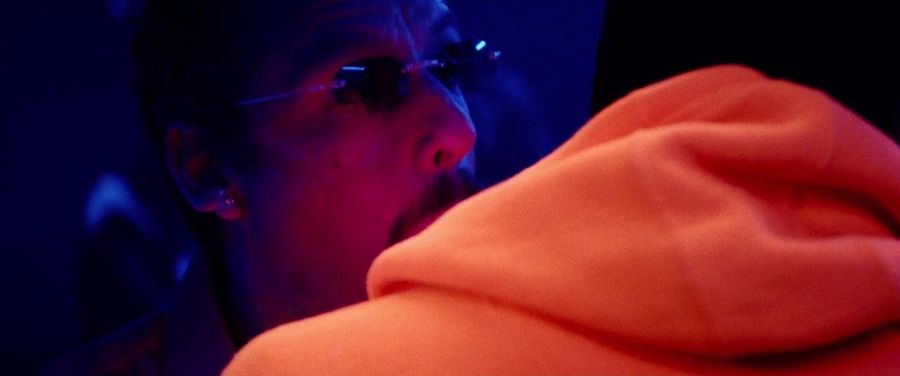
37Uncut Gems (2019) · dir. Josh and Benny Safdie · DP Darius Khondji
Light
Club blacklight: deep UV blue sinking the whole scene while the orange hoodie fluoresces like a hazard sign. Skin goes violet; only treated fabrics fight the blue.
Palette
#DC5D45#0C0658#05001C
Grade
UV blue crushed almost to black, one fluorescent orange scream.
Steal
Drown the scene in blacklight blue and dress the subject in one fluorescing colour; the wardrobe becomes the key light.
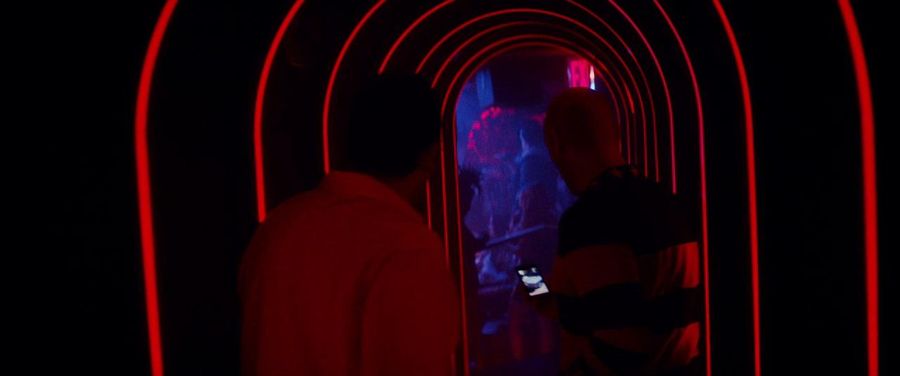
38Uncut Gems (2019) · dir. Josh and Benny Safdie · DP Darius Khondji
Light
Concentric red neon arches tunnelling back to a blue-lit room, figures held as silhouettes inside the glow. The tubes are composition, lighting and colour in one gesture.
Palette
#940208#450104#020003
Grade
Neon red on black, tubes hot, everything else surrendered.
Steal
Build the frame from repeated neon geometry and put the subject inside it as a silhouette; let the tubes draw the perspective.
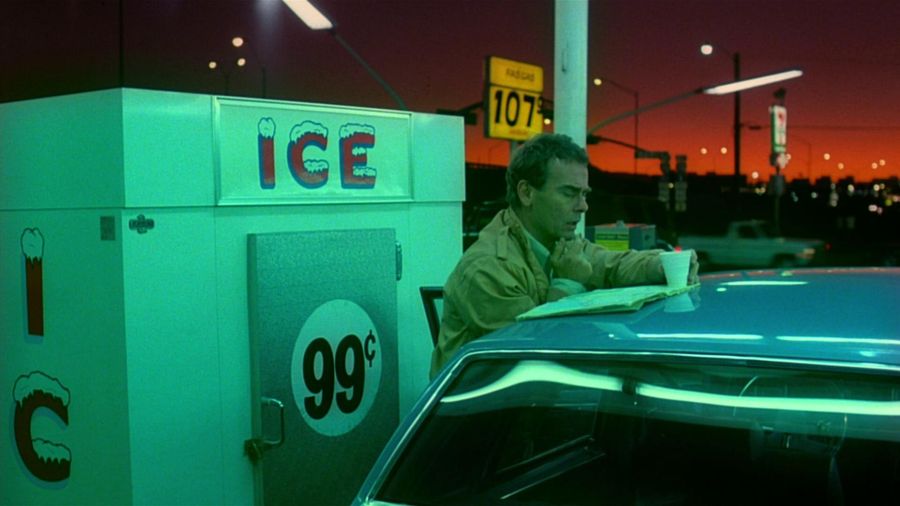
A green fluorescent ICE box glowing against a burnt-orange sunset sky, one tube overhead keying him cyan while the horizon does the warm half. Complementary colour as found on a forecourt.
Palette
#38C197#127E62#853B19
Grade
Muller neon realism: gas-station green versus dusk orange, both honest.
Steal
Find one green-glowing machine at dusk and shoot it against the orange sky; two colour temperatures, no filter, pure petrol romance.
One colour and nothing else. The frame empties out until only light remains, and whatever you put in it becomes iconic by default. My favourite place to work.
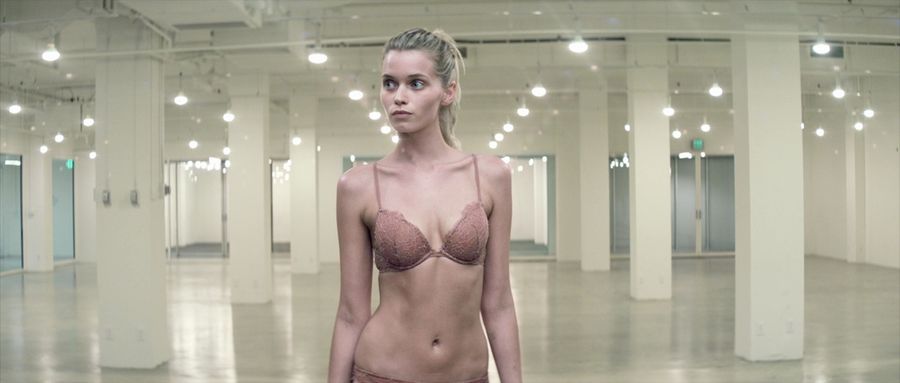
41The Neon Demon (2016) · dir. Nicolas Winding Refn · DP Natasha Braier
Light
A white studio hall lit by rows of bare ceiling bulbs, walls and floor within a stop of each other. She stands in beige against white, almost erased by evenness.
Palette
#D3CFC0#A09E8C#77685F
Grade
Clinical bone-white, shadows starved, skin the only warmth left.
Steal
Build an all-white space lit dead even and dress the subject a half-stop from the walls; presence by near-disappearance.
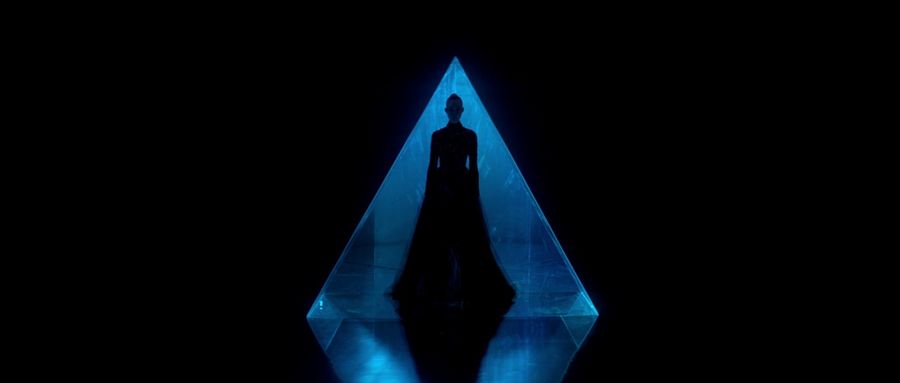
42The Neon Demon (2016) · dir. Nicolas Winding Refn · DP Natasha Braier
Light
A glowing blue prism in absolute black with a figure silhouetted inside it. The triangle is the only source in the universe of the frame.
Palette
#086AA3#04325B#000000
Grade
Electric blue on true black, edges razored, nothing ambient.
Steal
Put one glowing geometric shape in a black void and the subject inside or against it; light source, set and symbol in one object.
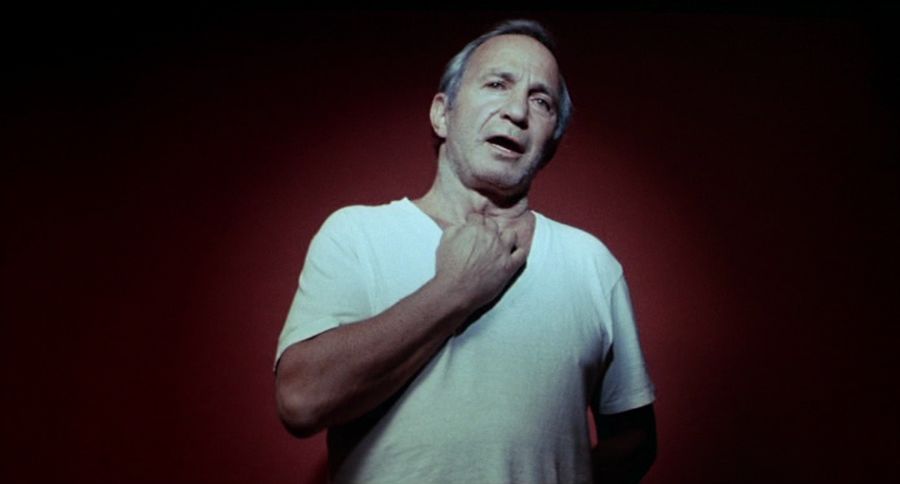
43Buffalo '66 (1998) · dir. Vincent Gallo · DP Lance Acord
Light
Cool white key from front-left on the white tee, deep red wall vignetting to black around him. Skin goes chalk, the red hums behind, and the frame feels like an interrogation of a saint.
Palette
#371216#90AEAD#060000
Grade
Reversal red so dense it reads as fabric, whites gone cold.
Steal
Stand the subject in white against a red field falling to black corners, one cool hard key; sincerity lit like an accusation.
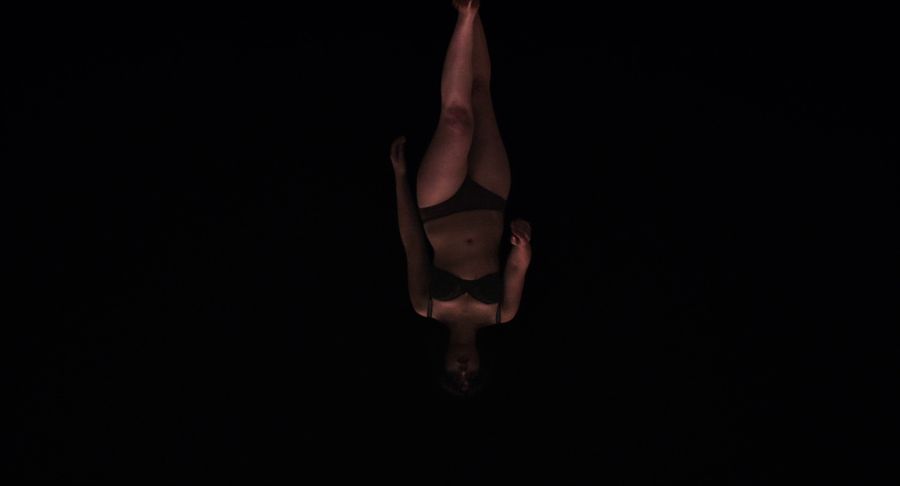
44Under the Skin (2013) · dir. Jonathan Glazer · DP Daniel Landin
Light
A body suspended in pure black, lit by one distant warm source so the skin barely registers as ember tones. No floor, no walls, no horizon: the dark is the location.
Palette
#371F1C#040303#010102
Grade
Black on black with embers, the minimum photons that still make a photograph.
Steal
Float the subject in a true black void with one faint warm source; render less than you think you need, then less again.
45Under the Skin (2013) · dir. Jonathan Glazer · DP Daniel Landin
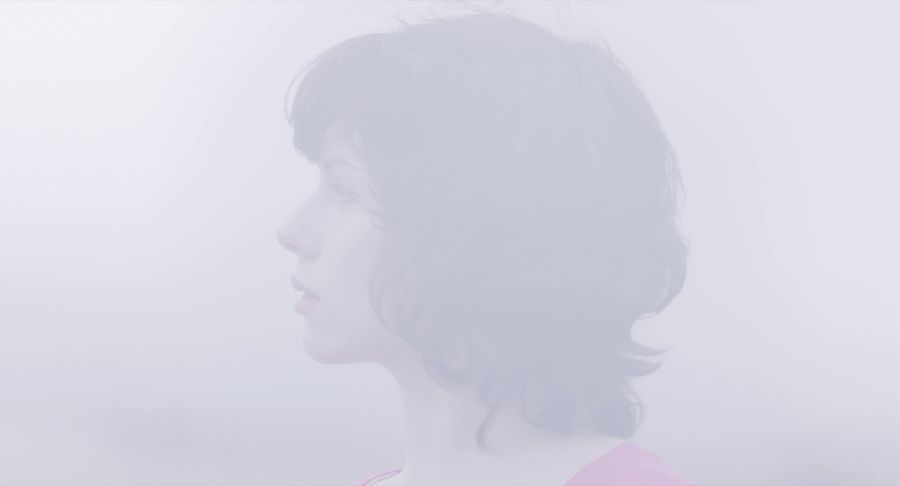
Light
The inverse void: white fog so thick the world is gone, her profile and dark hair the only marks left. Light with no direction at all, brightness as absence.
Palette
#EBECF2#D8D8E3#C3C5D3
Grade
Milk-white flatness, contrast surviving only in the hair.
Steal
Swallow the scene in white fog until only the profile survives; a portrait made of erasure.
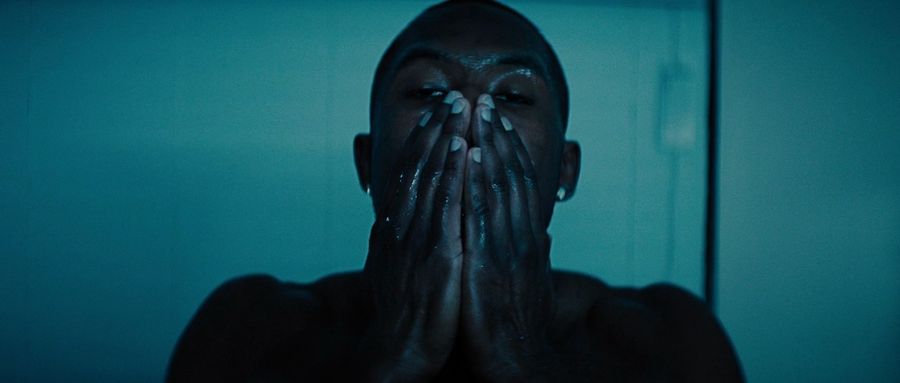
46Moonlight (2016) · dir. Barry Jenkins · DP James Laxton
Light
Cyan room, cold and complete: teal wall, blue-dipped skin, hands over the face catching the one soft source from front-left. Ice-bath light for an ice-bath moment.
Palette
#2A7D84#136A75#090F13
Grade
Chroma-rich teal monochrome, skin allowed to go fully blue.
Steal
Grade the whole frame into one cold teal, key softly from the front, and let gesture carry it; skin does not have to stay skin-coloured.
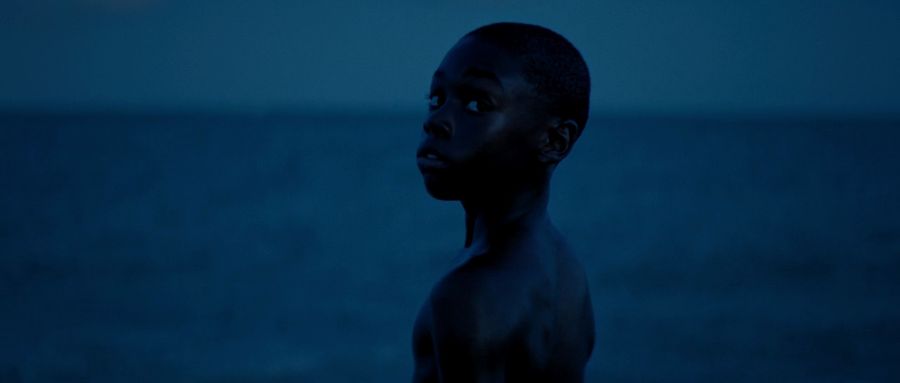
47Moonlight (2016) · dir. Barry Jenkins · DP James Laxton
Light
Moon-blue night at the sea's edge, one soft cold source playing moon over his shoulder look-back. Water and sky merge into the same deep blue plate.
Palette
#0E4565#043455#01050E
Grade
Day-for-night indigo, deep and clean, highlights kept lunar.
Steal
Light night skin with a soft blue moon source against a merged sea-sky field; the look back over the shoulder is the shot.
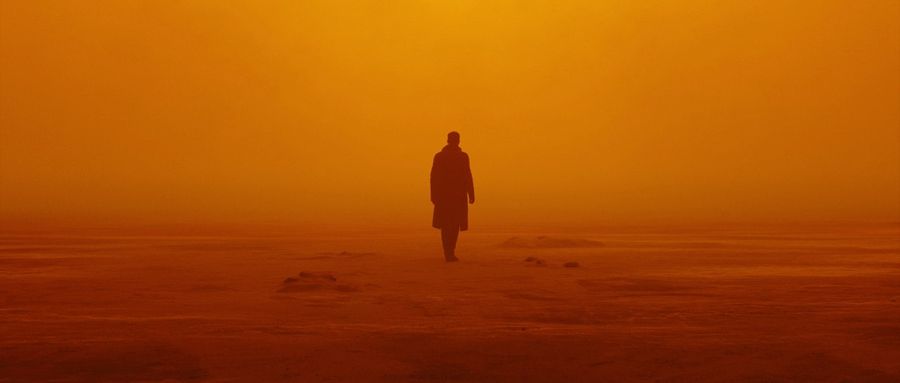
48Blade Runner 2049 (2017) · dir. Denis Villeneuve · DP Roger Deakins
Light
Orange dust fog with the sun nowhere and everywhere, one long-coat figure dissolving into it. Visibility is the subject; the void has a temperature.
Palette
#D98105#C86904#6F1C02
Grade
Monochrome amber, haze instead of shadow, silhouette instead of face.
Steal
Sink the world in one warm dust tone and walk a lone silhouette through it; describe the fog's colour, not the sun.
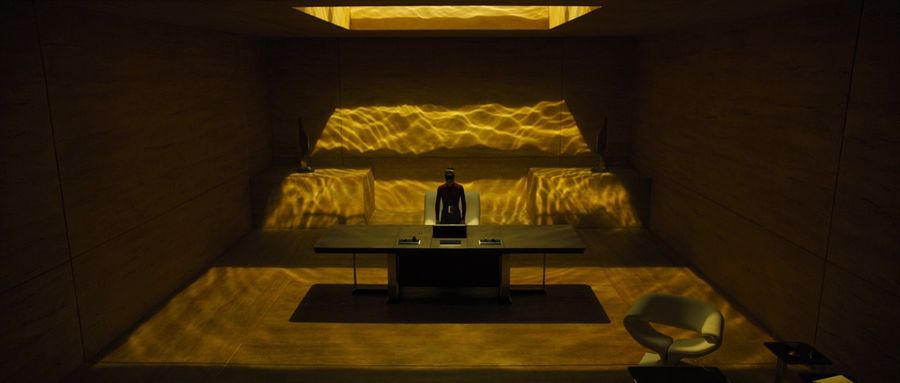
49Blade Runner 2049 (2017) · dir. Denis Villeneuve · DP Roger Deakins
Light
A gold chamber lit by water caustics: light bounced off a pool ripples across every wall in moving bands, one figure small and centred in the shimmer.
Palette
#9A700C#5F3F05#190F07
Grade
Molten gold and black, caustics as the only movement.
Steal
Light an empty room by bouncing your source off water so caustics crawl the walls; symmetry plus shimmer equals cathedral.
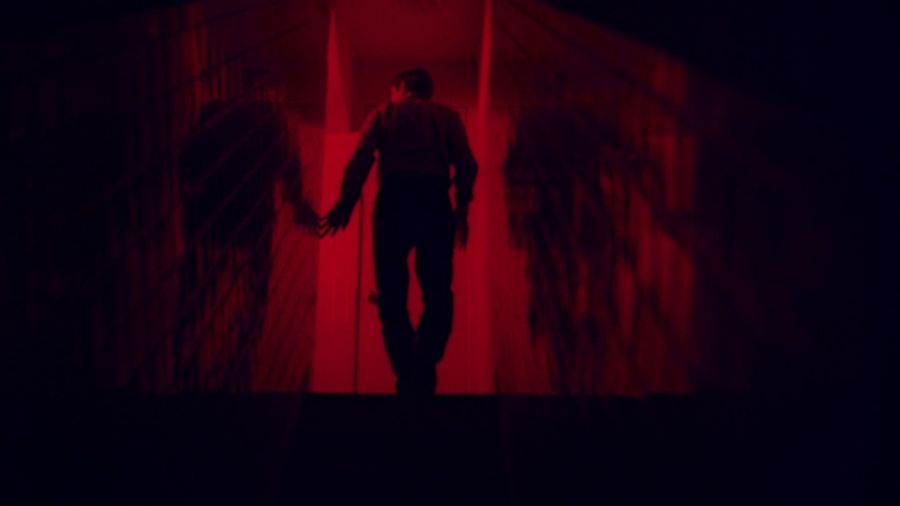
Pure red projection light behind a walking silhouette, his shadow splitting into feathered wings on the scrim. One colour, one figure, one trick of throw distance.
Palette
#710012#35000D#040010
Grade
Red bled to the edge of black, shadow softer the further it falls.
Steal
Backlight the subject with one saturated projector and shoot the shadow as the second character; red void, walking man, done.
Bonus 1: The Frame Thief
frame_thief.txt
Reverse-engineer this frame completely, as a cinematographer would:
1. LIGHT: key direction, hard or soft, contrast ratio, practicals, time of day.
2. LENS: focal length, camera distance, camera height, any tilt.
3. GRADE: the palette as 3 hex values, contrast curve, the film stock it resembles.
4. COMPOSITION: framing rule, negative space, where the subject sits and why.
5. TEXTURE: grain, halation, diffusion, imperfections.
Then write ONE image prompt that rebuilds this exact aesthetic around a new subject: [YOUR SUBJECT]. Keep every light, lens, grade and texture decision. Change nothing but the subject.
Attach any frame, fill the red bit, paste into Claude or ChatGPT
↳Proof, live
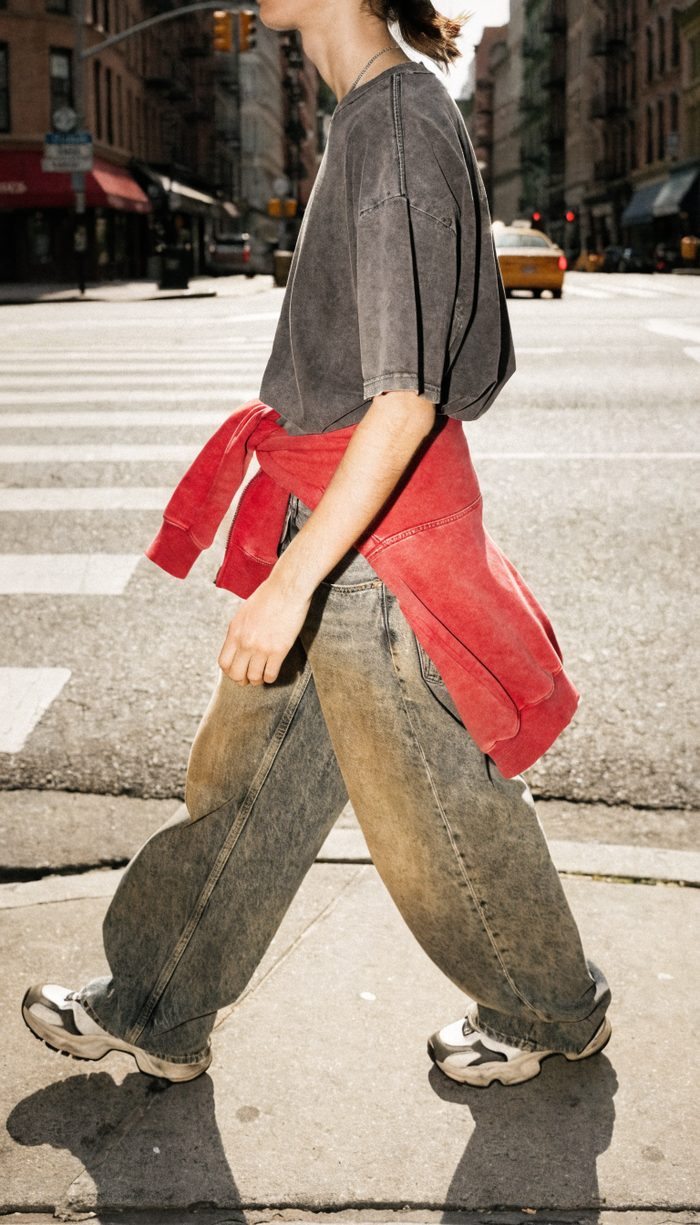
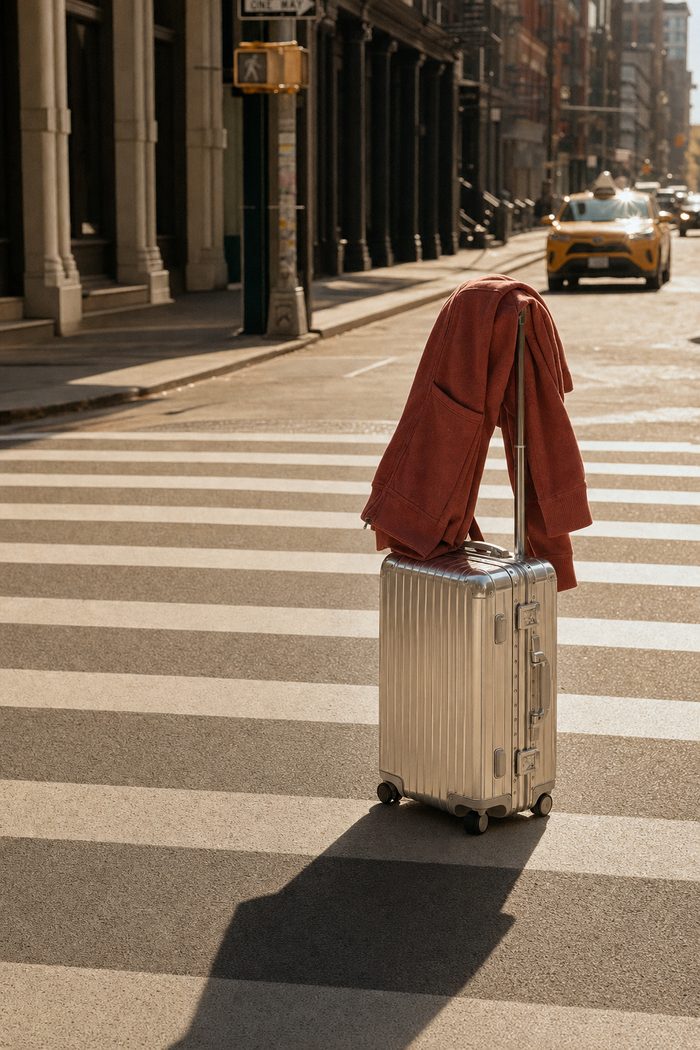
We ran it on one of our own frames and asked for a new subject: walker out, polished aluminium suitcase in. The decode pulled the sun, the 50mm and the Portra warmth, the hexes moved across untouched, and the rebuild came back first try. Same world, same grade, new subject.
The frameThe rebuild
Bonus 2: The Library
The 12 sites every good director raids. Pull a reference from any of them, then run the thief on it.
Film Grabfilm-grab.comScreenshot cinema's best frames, free. Feed the thief.
Ads of the Worldadsoftheworld.comRaid decades of campaigns by brand and medium.
All fifty frames remain the work of the directors and cinematographers credited under them; this page is a reference library for studying their decisions. Browse and support the source libraries above, starting with film-grab.com and directorslibrary.com, and watch the films properly. Study the light, take the lesson, and generate your own pixels.
 Free vault · fifty frames, decoded