One prompt rebuilds any image out of broken CRT phosphor. One more makes it move like an intercepted 1980s broadcast. The bonus puts it on a real television. Every prompt is here word for word.
The order
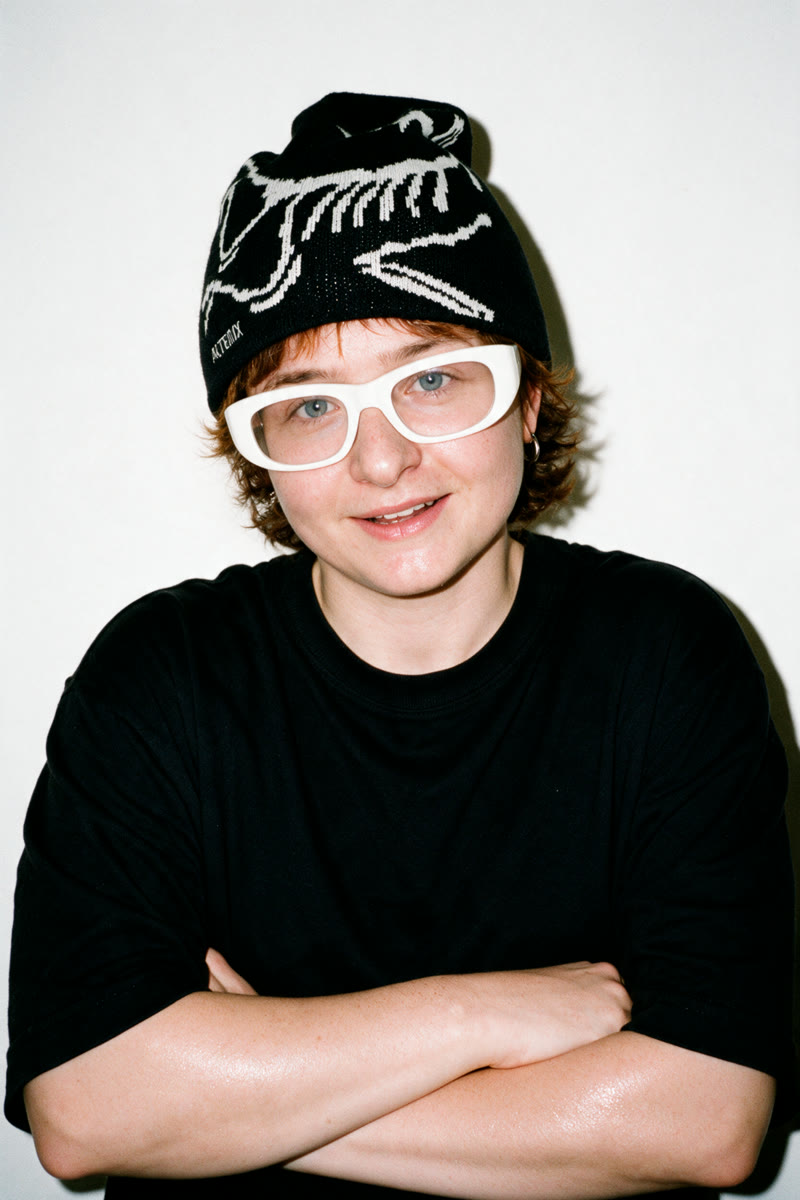
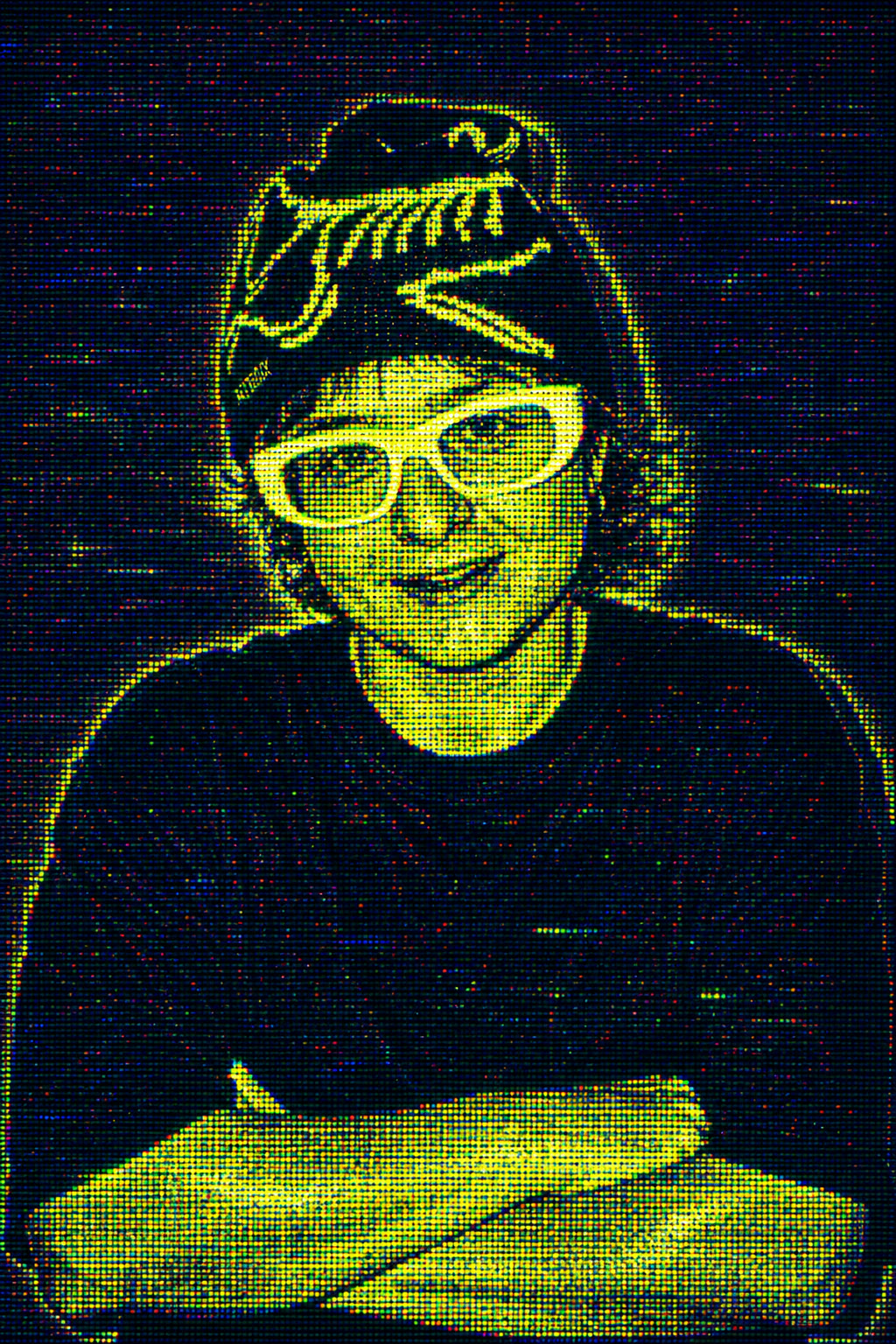
01/The imageUpload any image into ChatGPT and paste the first prompt. The whole frame gets rebuilt from RGB phosphor dots and scanlines. It is not a filter sitting on top, the raster physically constructs the picture. Works on portraits, products, logos, type.
02/The motionTake the result into Kling. 4K, 6 seconds, multi shot off. The prompt allows exactly one tiny movement: a blink, an eye toward camera. The stillness is what makes it unsettling. Do not let it perform.
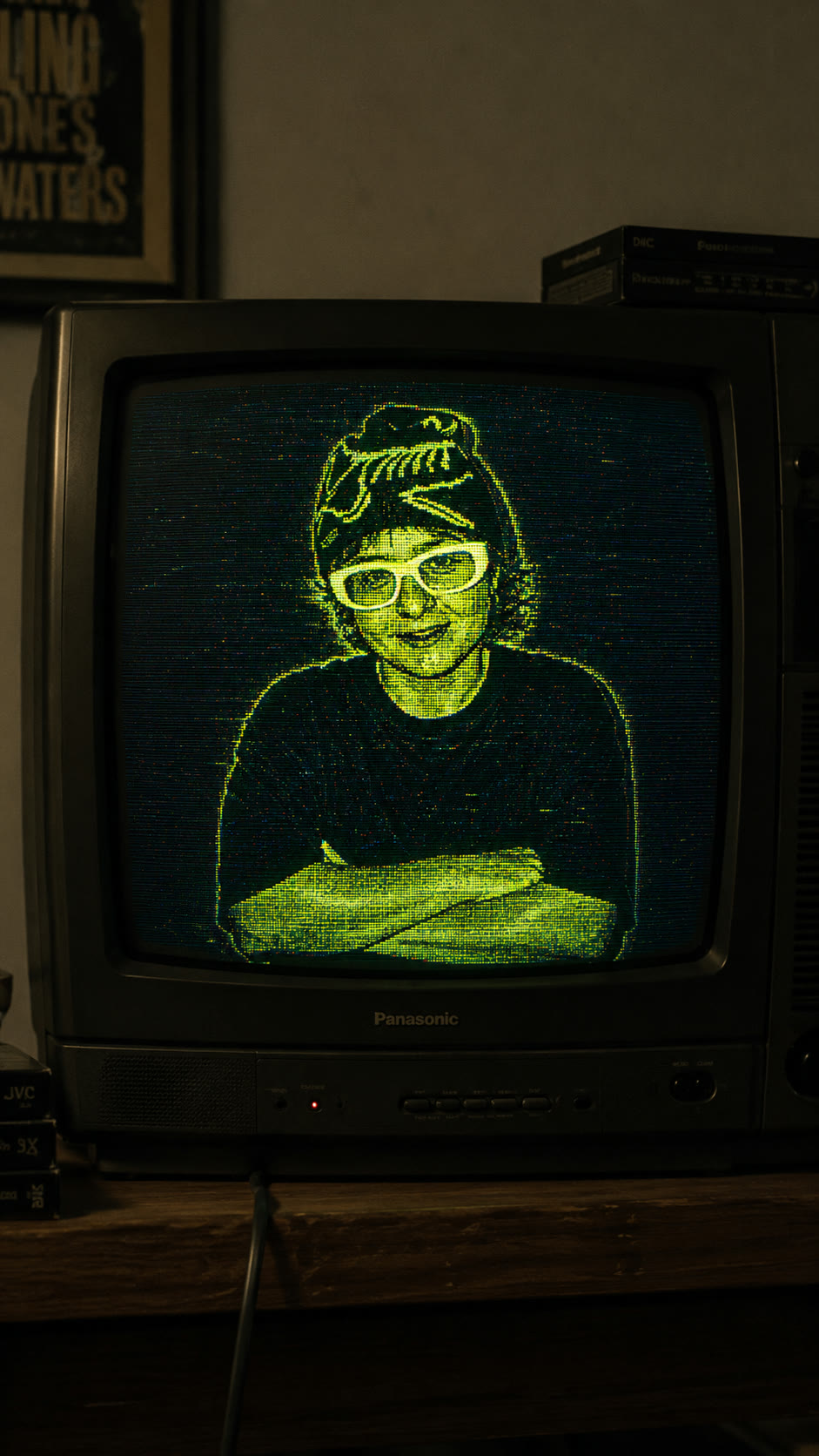
03/The televisionThe bonus. ChatGPT puts your CRT frame on a real vintage TV set, then Kling animates from your CRT image to the TV shot with both frames pinned, so the zoom-out cannot drift. Found footage of a broadcast that should not exist.
The CRT prompt
crt-image-prompt.txt
Step 1Upload any image into ChatGPT, then paste this prompt
Apply the exact visual treatment of an extreme macro photograph of a damaged colour CRT phosphor display to the supplied image.

Preserve the original composition, crop, subject, typography and layout, but reconstruct every visible element through a dense physical CRT raster. The source image must appear formed entirely from tiny RGB phosphor dots, horizontal electron-beam lines, coarse pixel clusters and irregular analogue signal breakup.

Use a near-black blue and navy base rather than pure black. Convert illuminated areas into intensely clipped acidic lime, fluorescent yellow-green and small traces of cyan. Add highly visible red, blue and magenta phosphor speckles throughout the shadows and around every bright edge. The colour should not be clean monochrome green.

Aggressively posterise and threshold the source image. Remove smooth photographic gradients. Break skin, objects, text and shadows into gritty dotted tonal bands, horizontal fragments and uneven glowing pixel fields. Bright areas should burn into yellow-white phosphor cores with green halos. Dark areas should contain blue-black noise, scattered coloured pixels and faint residual image information.

Cover the entire image with extremely fine, tightly packed horizontal scanlines and a dense RGB shadow-mask texture. Add irregular tracking lines, microscopic chromatic separation, red and cyan edge ghosts, granular interference, dirty electronic noise, subtle horizontal tearing, moiré patterns and degraded signal compression.

The effect must feel abrasive, high-contrast, tactile and densely textured, like a close-up scan of a malfunctioning colour terminal. It should resemble damaged screen-printed halftone artwork made from CRT phosphors.

Do not place the image inside a television. Do not add a monitor frame, rounded screen, bezel, vignette or visible hardware. Do not create a clean green night-vision effect. Do not preserve smooth skin or realistic photographic shading. The CRT raster texture must physically construct the whole image rather than sitting on top as an overlay.
Works on portraits, products, logos, type
↳What comes back
What went inWhat came back
The motion prompt
crt-motion-prompt.txt
Step 2Download the CRT image and upload it to Kling · 4K · 6 seconds · multi shot off · then paste this
Animate the supplied portrait as a corrupted late-1980s CRT transmission.

Keep the person's identity, facial structure, profile angle, expression, clothing and composition completely consistent. The subject remains almost unnaturally still, like a live surveillance feed that has frozen between frames.

Begin with the image struggling to lock onto the signal. Dense horizontal scanlines crawl vertically across the frame, fluorescent cyan static floods the background, and fragmented bands of the face briefly slide out of alignment before snapping back into place.

The subject makes one extremely subtle movement: a slow blink, a tiny shift of the eye toward the camera, then a barely perceptible turn of the head by only a few degrees. Keep all movement restrained, realistic and slightly unsettling.

As the face moves, bright yellow-green phosphors smear horizontally for a fraction of a second, leaving short acidic green afterimages. Red, blue and magenta pixels separate around the silhouette, eyes, nose and lips. Dark areas flicker with navy-black noise and scattered red phosphor sparks.

Add irregular analogue tracking errors, rolling interference bars, momentary horizontal tearing, brief frame duplication, signal compression, chromatic ghosting and unstable brightness. Occasionally lose part of the face inside a thick band of static, then reconstruct it from dense RGB phosphor dots.

The background remains abstract and electronic, pulsing softly with cyan raster noise. Finish with the signal becoming briefly sharp and intensely overexposed, the eye locking toward the viewer, then the whole frame collapsing into one horizontal line before cutting to black.

Camera remains locked off. No zoom, no camera shake, no dramatic body movement. The motion should feel like genuine corrupted CRT footage rather than a modern glitch overlay.

Mood: surveillance, identity scan, intercepted transmission, retro-futurist technology, cold and unsettling.

Duration: 6 to 8 seconds.
One tiny movement, nothing more
↳What comes back
The CRT transmission · Kling
The bonus · the TV reveal
Put it on a television
tv-image-prompt.txt
Bonus 1Upload your CRT image back into ChatGPT, then paste this
Use the supplied CRT portrait as the image playing on a real vintage television.

Start close on the CRT screen, with the portrait already visible and glowing through dense scanlines, phosphor dots, slight flicker and analogue signal noise. Then slowly pull back to reveal the full retro television set in a believable real-world environment.

The television should feel physically real and naturally photographed, with curved glass, rounded screen corners, subtle dust, minor scratches, faint fingerprints, plastic texture, small imperfections and authentic reflections on the screen. The CRT glow should cast soft light onto the TV casing and nearby surroundings.

Place the television in a simple, realistic setting such as a dim living room, studio corner, bedroom shelf or low table. Keep the environment understated and believable, not stylised or overly designed. Use practical details like a wall, floor, power cable, shelf, table surface or nearby objects in soft focus so it feels like a real place someone actually filmed in.

Lighting should feel natural and cinematic, with the television as the main light source. The room should be dark or low lit, but not fake-looking. Add subtle ambient shadow, realistic falloff, gentle lens softness and a little sensor grain so it feels like real camera footage.

Keep the portrait on the screen consistent and recognisable. The subject can remain mostly still, with only minimal movement such as a tiny blink or slight eye movement. The screen should show brief analogue imperfections like flicker, tracking wobble, slight brightness pulsing, chromatic fringing and occasional static interference.

Camera movement should be a slow, controlled zoom or dolly out. It should feel like a real camera filming a real TV, not a digital mockup. Prioritise realism, physical texture and believable atmosphere.

The final result should feel like found footage of a real old television playing this eerie CRT portrait.

Duration: 5 to 8 seconds.
Keep the room simple and believable
↳What comes back
The television frame
The reveal
tv-reveal-prompt.txt
Bonus 2In Kling: your CRT image as first frame, the TV image as last frame · same settings · then paste this
Animate the supplied CRT portrait as a retro television reveal.

Start in an extreme close-up on the glowing CRT image so the frame is filled with dense phosphor dots, horizontal scanlines, coloured signal noise and the subject's face. The image should feel harsh, fluorescent and unstable, with yellow-green highlights, cyan contamination, red and blue pixel speckling, subtle horizontal tearing and rolling analogue interference.

Then slowly zoom out over the course of the shot to reveal that the image is playing on a vintage retro television set in a dark room. As the camera pulls back, show the curved glass screen, rounded screen corners, black plastic or dark charcoal TV casing, subtle dust, light surface scratches, faint reflections on the glass and a soft glow spilling from the screen into the surrounding darkness.

Keep the portrait on the TV screen consistent and recognisable. The subject remains mostly still, with only minimal unsettling movement such as a slow blink or tiny eye movement. The CRT image should flicker slightly and occasionally lose signal for a split second, with brief static interference, tracking wobble, brightness pulsing and chromatic fringing.

The zoom-out should feel cinematic and controlled, not fast. The final frame should clearly show the whole retro television sitting alone in a dark environment, with the glowing portrait still active on screen. Preserve the gritty analogue CRT texture throughout. Make it feel like an eerie intercepted broadcast from an old television rather than a clean modern screen effect.

Mood: eerie, retro-futurist, surveillance-like, analogue, unsettling.

Duration: 5 to 8 seconds.
Pinning both frames stops the drift
↳What comes back
The reveal · both frames pinned
The point
The effect is free. The taste is the moat. Knowing when to hold a frame still,
when to let it break, and when to stop: that is the job. You're not prompting
anymore, you're art directing.